
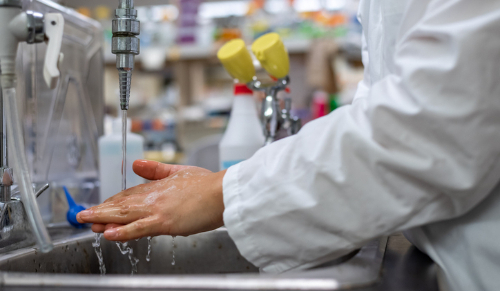

Many aspects of laboratory work require a sterile space, or a controlled risk of contamination.
This can be achieved with well organised infection control procedures, including a good understanding of hand hygiene.
What is sterility?
Not all laboratories need to be sterile, but avoiding contamination is imperative when testing items, or preparing products for other people.
Sterility is defined by the World Health Organisation (WHO) as freedom from the presence of viable microorganisms. This isn’t always possible, as this can affect the viability of products in the laboratory, so an alternative definition is the risk of contamination with replicating microorganisms being less than one in one million.
In laboratories where sterile spaces are not required, minimising cross contamination is still imperative to protect technicians and people who interact with the products in the future. Making effective changes begins with identifying sources of contamination.

Sources of laboratory contamination
Contamination is the introduction of foreign objects, in this case microorganisms, to a new space. In the laboratory this could come from, but is not limited to:
- Laboratory personnel and their PPE
- Equipment
- Airborne particles
- Water sources
When a person enters a space, they bring in a variety of microorganisms that can affect the sterility of the environment. Managing this, and minimising the risk of contamination, is key.
Methods to avoid contamination include the destruction/removal of microorganisms prior to entry (such as through hand hygiene), the adoption of sterilised PPE, and the removal of microorganisms through systems such as air purifiers.
Hand hygiene is one of the most important aspects of contamination management. It should be performed regularly with an effective cleaning solution, such as a soap or sanitiser, as technicians can contaminate their hands from many sources. This includes the outside world, various items in the laboratory, or from touching their face.

Hand hygiene in laboratories
Microorganisms have been found to survive on hands for differing times, from just minutes to hours, depending on the type of bacteria. This makes the regularity of hand hygiene protocols imperative; technicians should consider washing their hands upon entry to an area, before handling sensitive equipment or products, or after touching known contaminated equipment, such as a waste bin or door handle.
In order for hand hygiene to be effective, technicians need optimal products available, and must follow thorough cleaning techniques.
All areas of the hand should be cleansed, including some of the forearm in select cases; the laboratory should judge if this is necessary on a case-by-case basis.
Soap and sanitiser with Initial Medical
Hand hygiene products should be chosen from a well-regarded service in laboratory and healthcare spaces, like Initial Medical. The UltraProtect™ Hand Sanitiser is an alcohol-free solution that is powerful, gentle and long lasting.
It kills up to 99.99% of germs, including swine Flu, MRSA and Norovirus, to protect the health of technicians and prevent contamination of laboratory items.
It is dermatologically approved to not dry out or crack skin, and provides 8-hour hand surface protection, meaning technicians can use it reliably.
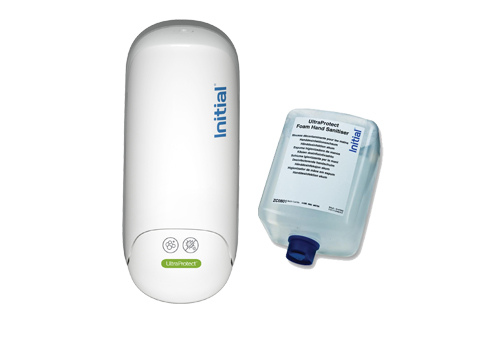
Laboratories can contact Initial Medical today for more support and advice on infection control routines.

Leave a Reply