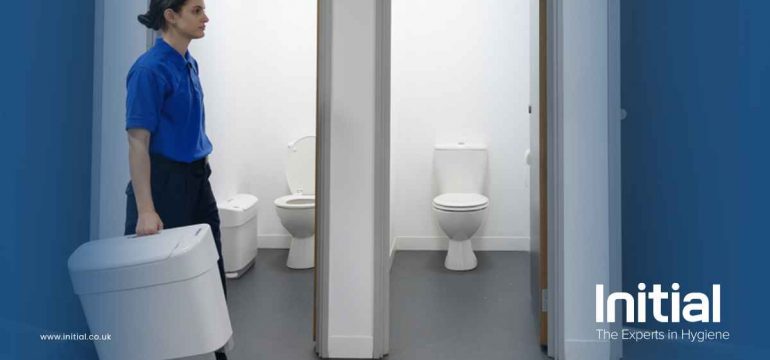

The condition of an organisation’s washroom facilities is a powerful, yet often overlooked, indicator of its operational standards and respect for its personnel. When an employee or client encounters a neglected sanitary waste bin or a lack of essential supplies, it creates friction that extends far beyond a minor inconvenience. In a business environment where employee welfare and operational excellence are critical, poorly maintained washroom facilities subtly undermine morale and signal a lack of attention to detail, leaving a lasting negative impression of the brand.
It is essential to elevate the discussion surrounding sanitary waste management beyond simple statutory compliance. While adhering to UK health and safety and environmental legislation is mandatory, effective washroom provision is fundamentally about fostering workplace dignity and psychological safety. Proper, discreet management ensures that these critical facilities are not only fully functional and hygienically maintained but also fundamentally demonstrate respect for every individual’s personal needs.
Consequently, modern washroom management operates at the intersection of three non-negotiable strategic pillars: rigorous legal compliance, robust environmental sustainability, and evolving social inclusivity standards. This article covers:
- What does inclusivity mean for the modern washroom?
- The legal framework for washroom sanitary waste
- The hygiene and accessibility challenge of washrooms
- Setting a new standard for sanitary waste disposal
What does inclusivity mean for the modern washroom?
The presence of a sanitary (period waste) bin has traditionally been viewed narrowly as a requirement for female washrooms. This outdated perspective fails to reflect the realities that providing discreet, hygienic waste disposal options is not a gender-specific issue. True inclusivity recognises the diverse physical needs of all washroom visitors.
- Male washrooms and stoma care: There are estimated to be over 200,000 people in the UK living with a stoma. Due to a lack of waste bins in male washroom toilet cubicles, men often have to carry used stoma bags out of a cubicle to a shared bin or, worse, a communal area. Providing a disposal unit in male cubicles is a basic requirement for dignity, but is currently not commonplace.
- Prostate health and incontinence: 30–70% of men report an increase in urinary incontinence after prostate cancer surgery and other treatments.
- Trans and non-binary inclusion: Employees who menstruate but do not use female-designated washrooms deserve the same level of privacy and hygiene.
The hidden struggle of hygiene anxiety
The impact of poor provision manifests in presenteeism, in which employees are physically at their desks but mentally distracted by discomfort or the logistical stress of managing their hygiene.
Hygiene anxiety can drive staff to leave the office early, take extended breaks to find suitable public facilities, or avoid coming into the office altogether on specific days. When a person feels their workplace cannot meet their most basic biological needs, their engagement with that organisation begins to erode.
The legal framework for washroom sanitary waste
Four pieces of legislation dictate how a business or organisation must provide suitable washroom facilities and how to handle sanitary waste.
- The Workplace (Health, Safety and Welfare) Regulations 1992: Under Regulation 21, employers are legally required to provide “suitable and sufficient” sanitary conveniences. The Approved Code of Practice and guidance for the regulations specifically notes that in facilities used by women, this must include a “suitable means” for the disposal of sanitary dressings. There is no similar requirement for men yet, although the issue has been discussed in Parliament.
- The Water Industry Act 1991: Under Section 111, it is an offence to discharge any matter into a public sewer that is likely to interfere with the free flow of its contents. When sanitary products from a business cause a blockage onsite or in the local network, the business is liable for the repair costs and may face prosecution by water authorities for environmental damage.
- The Environmental Protection Act 1990 (Duty of Care): This is perhaps the most significant hurdle for business owners. The Duty of Care legislation dictates that you are responsible for your waste from the second it is produced until its final destruction. You cannot simply hand it to a cleaner to put in the general waste. You must use a licensed waste carrier and maintain a record of “Waste Transfer Notes” (kept for a minimum of two years).
- Approved Document M of the Building Regulations states that a sanitary waste disposal bin should be provided in accessible washrooms.
The hygiene and accessibility challenge of washrooms
The most significant barrier to a truly functional washroom isn’t usually the plumbing or aesthetics, but the “last mile” of the user experience: waste disposal. For many, this is a moment of high friction. When a disposal unit is poorly designed, incorrectly placed, or absent, it turns a routine human necessity into a stressful, unhygienic ordeal. Addressing these challenges requires moving beyond the “one-size-fits-all” approach and recognising that a cubicle’s physical layout can empower or exclude a user.
The touch barrier and cross contamination
The most immediate pain point is unit hygiene. In a professional setting, any requirement to touch a waste bin by hand is increasingly viewed as undesirable. Manual-lift lids are considered by many to be unhygienic and a possible source of cross contamination. Even foot-operated bins can pose a challenge; the pedals are frequently the first component to break under heavy use, leaving the unit permanently open or forcing the user to touch a contaminated surface.
For those with limited dexterity, such as individuals with arthritis or neurodegenerative conditions, a heavy lid or a stiff pedal is both unhygienic and an insurmountable barrier. Touch free technology is a baseline requirement for reducing the “ick factor” and maintaining the sterile integrity of the washroom space.
The physical reach gap
Accessibility is frequently undermined by poor spatial planning. In many UK washrooms, sanitary bins are squeezed into the narrow gap between the toilet and the partition wall, and are often placed too far back. This reach gap is a significant hurdle for:
- Wheelchair users: May not be able to twist their torso to reach a bin placed behind the toilet line.
- Individuals with limited mobility: For whom bending down to floor level causes physical strain or loss of balance.
- People with visual impairments: Who need high-contrast, predictably placed units rather than small, dark bins tucked into shadows.
Under British Standard BS 8300, the layout of an accessible washroom must ensure that all fittings are within easy reach of a person seated on the toilet. Yet, the disposal unit is often treated as an afterthought, relegated to whatever floor space remains after the main fixtures are installed.
Setting a new standard for sanitary waste disposal
Finding a hygienic and supportive way to dispose of personal sanitary waste is an everyday source of anxiety for millions. To anticipate these needs and create a more positive user experience, the Signature Inclusive Sanitary Bin has been designed to deliver uncompromising hygiene and promote universal washroom dignity.
Inclusive design and adaptability
The unit has a 17.5-litre capacity and an enlarged waste tray. This reduces the risk of jamming while easily accommodating both standard period products and bulkier incontinence items.
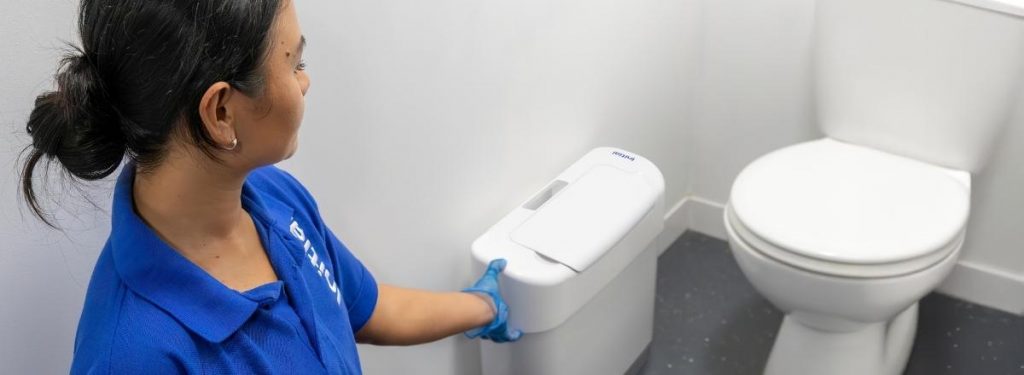
The bin also offers adaptability through its modular design, allowing facilities to choose the best mechanism for their space. Options include a manual unit, a no touch automatic system, and a unit with an interchangeable pedal that allows it to be installed on either side of the toilet. It can also be wall-mounted to simplify floor cleaning.
Prioritising discretion and hygiene
The bin has a slim, space-saving profile that fits neatly into narrow toilet cubicles, helping to prevent unwanted physical contact between the user and the unit. Disposal is considerate to users, having quiet operation and a modesty flap that keeps the contents out of sight.
The bin’s construction minimises cross contamination opportunities by keeping touchpoints safely away from the waste tray, while its integral antibacterial surface technology helps prevent the spread of germs.
Promoting washroom dignity for all
This adaptable bin serves as a single, future-ready solution for female, male, unisex and accessible washrooms. By accommodating diverse waste streams and ensuring a discreet, hygienic user experience, the Signature Inclusive Sanitary Bin helps businesses uphold dignity for all in every washroom.
FAQ
1. Why should businesses provide sanitary waste bins in male washrooms?
Providing sanitary waste bins in male washrooms is essential for dignity and inclusion. Over 200,000 people in the UK use stoma bags, and up to 70% of men experience incontinence following prostate treatment. Without bins, these individuals must carry waste to communal areas, causing significant distress. Offering discreet disposal facilities also supports trans and non-binary employees, ensuring everyone has access to private, hygienic solutions regardless of which washroom they use.
2. What constitutes the legal framework for managing sanitary waste in UK business environments?
UK businesses must comply with several regulations regarding waste management. The Workplace (Health, Safety and Welfare) Regulations 1992 mandate “suitable and sufficient” disposal facilities, while the Environmental Protection Act 1990 requires the use of licensed waste carriers and keeping records for two years. Additionally, the Water Industry Act 1991 prohibits flushing sanitary items that could cause blockages. Finally, Approved Document M of the Building Regulations requires that all accessible washrooms be equipped with proper sanitary waste disposal units.
3. How does poor washroom hygiene affect employee productivity?
Poorly maintained facilities can cause “hygiene anxiety“, which negatively impacts morale and focus. Employees may suffer from presenteeism, meaning they are physically present but mentally distracted by the stress of managing personal hygiene in an inadequate environment. In some cases, staff may even avoid the workplace entirely or take longer breaks to find suitable public facilities. Meeting these basic biological needs is crucial for maintaining high engagement and signalling respect for all personnel.
4. What features make a sanitary bin truly inclusive and accessible?
An inclusive bin, such as the Signature Inclusive model, features touch-free technology to support users with limited dexterity and enhance hygiene. It should have a high capacity (approximately 17.5 litres) to accommodate bulkier incontinence products and period pads. To comply with accessibility standards (BS 8300), bins must be reachable from the toilet seat. Additional features, such as quiet operation and modesty flaps, ensure discreet disposal, helping to preserve the dignity of every washroom user.