
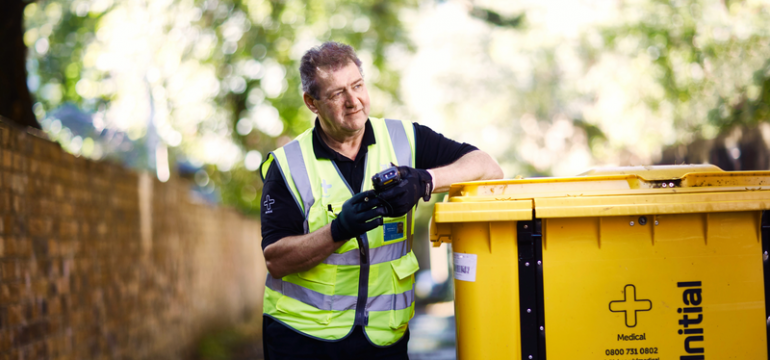

Many items used in everyday healthcare, veterinary and dental practices are disposed of immediately after use. Others may be autoclavable, but inevitably will reach the end of their lifespan. This results in high levels of daily clinical waste creation.
Where these items end up is important, as it affects public safety and impacts the environment. More green alternatives, such as recycling, are preferred but not always possible.
Energy from Waste (EfW) facilities aim to bridge the gap by ensuring clinical waste can serve our communities long after disposal. This is especially the case for items that may not be able to be recycled and repurposed, and would otherwise be condemned to landfill or incineration with no additional benefits; only a detriment to the environment.
So, what should clinicians know about the practice that has been described as turning ‘trash to treasure’?
What happens at an EfW plant?
Breaking down the waste components it receives, an EfW facility produces energy, and sometimes heat, whilst also recovering metals from bottom ash. This is the product left behind after incineration at around 1000ºC, and can be recycled into aggregate, which is then used in construction. This level of heat is equivalent to or hotter than lava in many cases.
Incinerator bottom ash can be used when building roads, cycleways and pathways, as well as pipe bedding. Upon incineration, waste typically loses 80–90% of its volume and 70–80% of its mass, but can still make a significant difference in these construction workflows. This is just one way that EfW facilities begin to give items a second life.
As a by-product of incineration, the waste also creates a hot flue gas, which is used to boil water. This creates steam that drives turbines, generating electricity. Through this process, items such as used non-infectious PPE can therefore be reprocessed to power households, businesses, and healthcare practices across the country.
Before the hot flue gas is exposed to the environment, it is cleaned. Acidic gases are neutralised, and dioxins and heavy metals are removed, before the gas passes through a fine fabric filter that captures any remaining particles.
As a result of these processes, EfW facilities produce electricity and building materials as well as recycling metals that would otherwise go to waste if left untouched. Health Technical Memorandum 07-01 (HTM 07-01) notes that in one case study, London North West University Health NHS Trust implemented staff training on correct segregation, ensuring appropriate waste items ended up at EfW sites. This also required collaboration with their waste contractor, who ensured offensive waste was sent to EfW facilities. In turn, approximately 8MWh of energy is produced per year, the equivalent of powering 35 houses.
Of course, all NHS Trusts differ in size, but with 202 operating as of mid-2025, a potential 7,070 homes could be powered through this approach year-round.
Are there other ways to produce EfW?
Cold plasma pyrolysis is an alternative form of EfW, a process which decomposes waste material at temperatures of around 600ºC, with limited oxygen. It is currently targeted at plastics and, therefore, will not be suitable for all waste items, but awareness of it is important nonetheless.
According to researchers at Newcastle University, facilities that perform cold plasma pyrolysis can convert waste plastics into hydrogen, methane and ethylene; the first two are clean fuel sources, and ethylene can be re-entered into the plastic creation cycle.
Plasma technologies used to manage hazardous waste typically operate at temperatures exceeding 3,000ºC. When this system operates at lower temperatures, facilities can conserve energy, maximising the benefits of their work.
Which items can be sent to EfW facilities?
In line with current regulations, only some clinical waste items can be sent to EfW sites for disposal and reprocessing.
HTM 07-01 uses the waste colour code to highlight products that are suitable for this workflow. It includes domestic/municipal waste, placed in black bags, and offensive waste, which is signified by yellow and black (tiger-striped) containers.
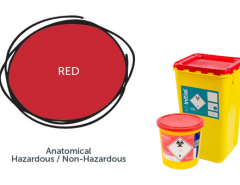
More hazardous waste types, such as highly infectious and anatomical items, are not suited to EfW workflows. Often, eliminating the risks created by these items requires a higher level of energy, meaning straightforward incineration without energy production is implemented.
Landfill is an alternative waste management option for both offensive and municipal waste; however, whilst it is legal, it is not recommended in the case of offensive waste workflows. Here, EfW is clearly preferred.
Offensive waste produced within healthcare environments includes items that are typically unpleasant, but not hazardous. For example:
- Used non-infectious PPE
- Sanitary waste/nappies
- Couch roll
- Non-infectious items contaminated with blood and other body fluids, such as gauze
Municipal waste will likely include plastic from food packaging in staff areas, and any other waste typically found in homes.
How Initial Medical can help your practice become more sustainable
In order to ensure healthcare practices maximise the potential of their waste items and abide by current regulations, effective waste segregation is needed.
As an ISO 14001 environmentally accredited organisation, Initial Medical is deeply committed to sustainability. We are actively working towards an ambitious target: to move all suitable waste to energy (EfW) facilities across the UK within the next three years.
A key enabler of this strategy is effective waste segregation at the source. By ensuring that offensive and municipal waste is safely separated from high-risk items, practices can help us divert more waste toward energy recovery. Initial Medical supports this critical process by providing a range of clinical waste containers designed to comply with all vital regulations whilst keeping your team, visitors, and the environment safe.
For non-hazardous or offensive waste our ranges include:
- The Tiger Stripe Bio-bin, a sustainable, paper-based solution for offensive waste collection. It can absorb excess liquid and is available in a range of sizes to suit your clinical needs.
- Our pedal-operated offensive waste bins, which feature innovative Silversafe™ plastic to kill 99.9% of bacteria on contact, further reducing infection risks when disposing of offensive waste items.
Frequently Asked Questions
Is energy from waste environmentally friendly?
Yes, Energy from Waste (EfW) is considered a significantly more sustainable alternative to landfill. By diverting non-recyclable clinical waste from landfill, EfW facilities prevent the release of methane—a potent greenhouse gas—and instead recover valuable resources. The process captures energy in the form of electricity and heat for local grids, recovers metals for recycling from bottom ash, and uses inert residues as construction aggregate. Additionally, modern EfW facilities employ rigorous filtration technologies to neutralize acidic gases and remove pollutants, ensuring emissions are kept strictly within environmental safety limits.
What are the benefits of EfW over landfill?
EfW offers three primary advantages over traditional landfilling:
- Volume Reduction: Incineration reduces waste volume by 80–90% and mass by 70–80%, drastically decreasing the amount of material requiring final disposal.
- Resource Recovery: Unlike landfill, where waste sits inert or decomposes over decades, EfW recovers energy (steam/electricity) and recyclable materials (metals and bottom ash) from the waste stream.
- Carbon Impact: By generating power and heat, EfW can offset the need for fossil-fuel-based energy, helping to lower the overall carbon footprint of waste management.
How do I ensure my practice’s waste is suitable for EfW?
Ensuring your waste is suitable for EfW starts with rigorous segregation at the point of production, as guided by HTM 07-01.
- Correct Segregation: Focus on correctly identifying offensive waste (yellow and black tiger-striped containers) and municipal waste (black bags). These streams are ideal for EfW workflows.
- Keep Streams Clean: Hazardous waste, such as highly infectious or cytotoxic items, must be kept strictly separate from offensive and municipal waste. These hazardous items require specialised, high-intensity incineration or alternative treatment rather than standard EfW processing.
- Consult the Experts: Partner with a waste management specialist to conduct regular waste audits. They can ensure your team is trained in current colour-coding standards and that the correct containers are available at the point of use to prevent cross-contamination.
Leave a Reply