

For any clinical team, the safe management of controlled drugs is a balancing act. You have to maintain rigorous compliance, protect your patients, and ensure your staff are supported—all while managing the daily pressures of a busy healthcare setting. Many drugs and pharmaceutical items require specialised management to prevent harm to patients, clinicians, and waste handlers. In the UK, these fall under the category of ‘controlled drugs,’ which require precision, care, and total transparency throughout their lifecycle. This guide cuts through the regulatory noise to help you confidently manage the storage and disposal of these items.
Key Takeaways:
- Safety First: Controlled drugs require specialised storage and disposal to prevent patient and handler harm.
- Stay Compliant: Strict adherence to “The Misuse of Drugs Regulations 2001” and “HTM 07-01” is mandatory.
- The Denaturing Process: All controlled drug waste must be rendered irretrievable using an authorised process before final disposal.
- Leadership Matters: A Controlled Drugs Accountable Officer (CDAO) must be nominated to oversee policy and management.
All team members should be aware of their responsibilities surrounding controlled drugs. This requires:
- An understanding of the types of controlled drugs used in a given healthcare setting
- A grasp of the key regulations that surround controlled items
- Confidence in the workflows laid out for the storage and disposal of items
- A range of effective waste containers located around a practice
What are controlled drugs and how are they classified?
Controlled drugs are medications with strict legal requirements due to their potential for misuse or harm. They are categorised into five “schedules” based on their medicinal use and risk profile. Understanding these classifications is the first step in ensuring legal compliance and clinical safety.
Drugs and pharmaceuticals are safe only when handled with proper knowledge of their effects. The Misuse of Drugs Regulations 2001 outlines who is authorised to possess or supply these items, categorising them by ‘schedule.’ Each schedule defines the exact actions required for handling:
- Schedule 1: Primarily hallucinogens (e.g., ecstasy, cannabis). Not used medicinally. While rare in healthcare settings, any receipt of these must be recorded in a controlled drug register.
- Schedule 2: Includes opiates, ketamine, and major stimulants. Requires meticulous records, safe custody, and specific prescription handling.
- Schedule 3: Includes barbiturates and buprenorphine. These carry specific prescription requirements and safe custody rules, though they do not always require a register entry (invoices must be kept for two years).
- Schedule 4: Includes benzodiazepines and anabolic steroids. These have lower regulatory barriers and are generally exempt from safe custody requirements.
- Schedule 5: Low-strength preparations, such as nitrous oxide. They are largely exempt from most regulations, provided invoices are retained for two years.
What are the key regulations for controlled drug waste?
Regulatory frameworks exist to protect the entire clinical supply chain. It isn’t just about “checking boxes”—it’s about ensuring that production, supply, and possession of these substances are tracked with absolute integrity.
- The Misuse of Drugs Act 1971: One of the most important, laying the groundwork by helping to regulate the production, supply and possession of many products, listed into different classes.
- The Misuse of Drugs Regulations 2001 and 2012: This implements the different schedules laid out for controlled drugs, as listed above. These define who can prescribe and administer controlled drugs. For example, it details that doctors and dentists may administer drugs in Schedule 2, 3 or 4, and any person may administer Schedule 5 drugs.
- The Controlled Drugs (Supervision of Management and Use) Regulations 2013: This mandates the role of the Controlled Drugs Accountable Officer (CDAO). This team member is responsible for ensuring controlled drugs are managed safely within their organisation. Importantly, a CDAO must be a senior manager within their organisation, and will not routinely supply or handle controlled drugs as part of their duties.
- Health Technical Memorandum 07-01 (HTM 07-01) Your “go-to” technical guide for disposal workflows. Clinicians can refer to this for the majority of insights into aspects such as the clinical waste colour code, and who is actually allowed to destroy and dispose of high-schedule items.

How do you safely store controlled drugs?
Keeping controlled drugs safely in a healthcare practice is key. Diligence is vital for items being stored before use, all the way until they are disposed of. As previously mentioned, different items will have varying requirements based on the schedule of controlled drugs that they fall under.
A controlled drug register is your primary audit trail. It must record the receipt, administration, disposal, and transfer of items, and be kept for two years from the date of the last entry.
Schedule 2 controlled drugs must be recorded in a register in line with regulations. The National Institute for Health and Care Excellence suggests that clinical teams should consider whether it is prudent to treat Schedule 3 and 4 drugs in the same way. Where this is achievable, it may support the safe management of these items and help team members further protect patients.
Where possible, always make entries with a suitably trained witness present. For Schedule 2 and many Schedule 3 drugs, you must use a designated controlled drug cupboard. For the latter, this includes solutions such as buprenorphine and temazepam, but will not include midazolam and barbiturates, amongst others.
How do you denature controlled drugs for disposal?
The safe disposal of controlled drug waste in a healthcare setting will ensure clinical teams, patients and waste handlers are all kept safe. Many of these pharmaceutical items, especially in higher schedules, present a severe risk to health or treatment outcomes. Team members must be clear on the routines that they are a part of. Items may be disposed of if they are out of date, unwanted, or if too little remains in a container for further clinical use.
The first important step to note is that controlled drugs must be rendered irretrievable before disposal. This includes the use of a denaturing kit. The controlled drug can therefore not be recovered or reused, and will present a lower risk of harm to anyone or anything in the environment that comes into contact with it.
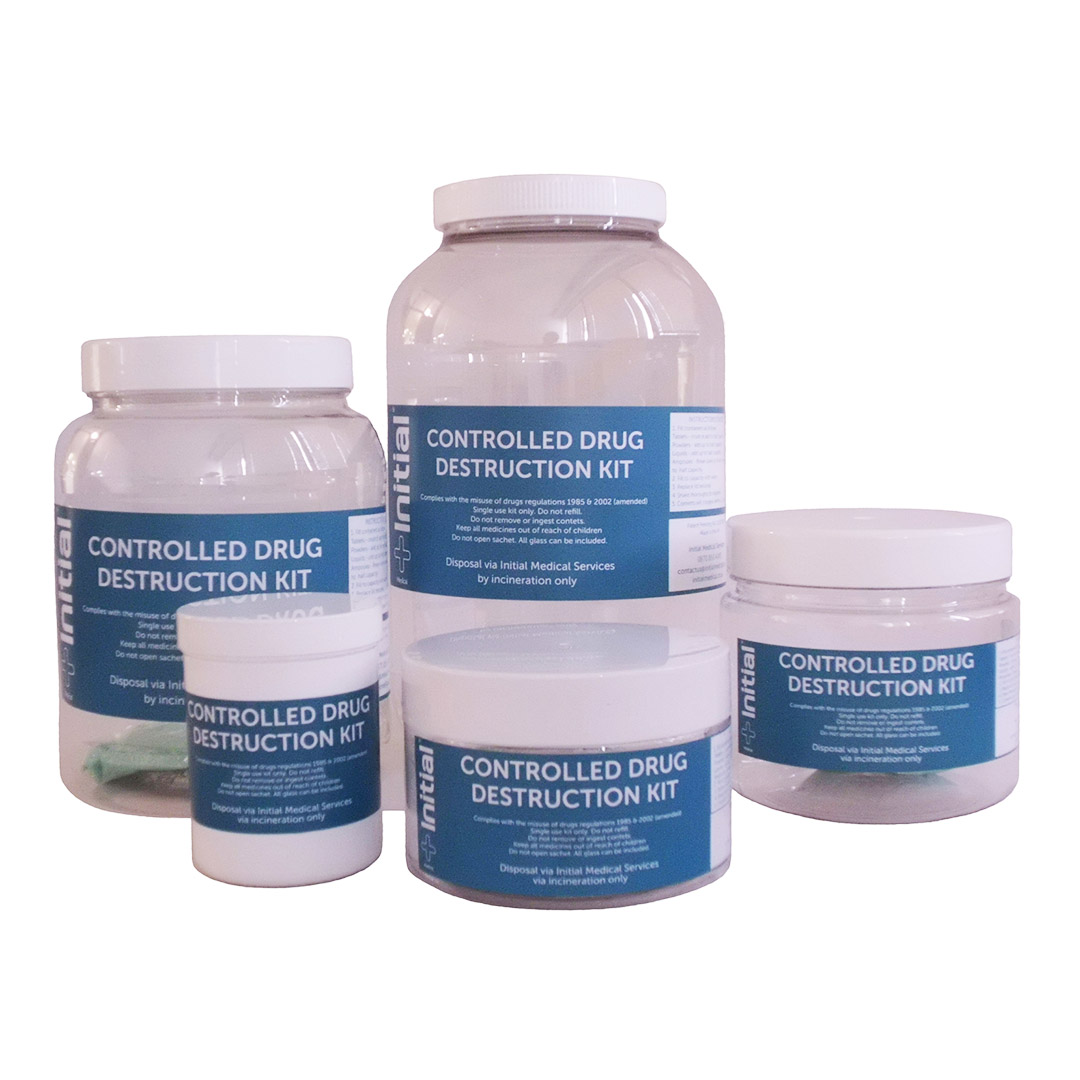
A controlled drug denaturing kit, like those available from Initial Medical, helps healthcare teams keep in line with vital regulations. For this to be used on a site, a T28 exemption certificate must be registered. These will ensure an authorised person can carry out this task safely; however, it only relates to waste produced on site.
A non-waste framework directive (NWFD) exemption will protect a clinical team when temporarily storing waste at a collection point. Titled NWFD 4, this exemption ensures a pharmacy can take back and store out-of-date medicines that are returned by patients, and also allows for a needle exchange scheme.
If you are disposing of a Schedule 2 item, an Authorised Witness must be present; this could be a CDAO. Whilst a witness is not required in many other circumstances, it may be a benefit to keep the entire team safe.
When a stock-controlled drug is denatured, the following details must be recorded:
- Name, form, strength, and quantity of the drug.
- Date of destruction.
- Two signatures (The person enacting the destruction + the witness).
How should you safely dispose of controlled drug waste?
After the waste item has been denatured, it must still be disposed of in line with clinical waste regulations, thoroughly laid out in HTM 07-01. Used controlled drug disposal kits should be placed into blue waste containers, which signify medicinal waste. The only time a blue container may not be used is in the event that the controlled drug has cytotoxic or cytostatic properties. If this is the case, place the item in a purple container following denaturing.
Pro-Tip: Place your waste containers as close to the point of use as possible—near your controlled drug cupboard or primary treatment areas. This minimises the distance clinical staff have to carry hazardous waste, effectively reducing the risk of a spill or contamination.
Choosing safe, reliable solutions from a trusted partner is vital. Initial Medical provides industry-standard Controlled Drug Denaturing Kits for safe, compliant drug destruction. These kits achieve 100% drug destruction within 24 hours and are manufactured using sustainable materials, ensuring your practice remains in full compliance with HTM 07-01 regulations.
Initial Medical can also provide advice to healthcare services to ensure their waste management procedures operate successfully in line with current regulations. Simply contact the team today to learn more.
Frequently Asked Questions
- Who is responsible for controlled drugs? A nominated Controlled Drugs Accountable Officer (CDAO) holds ultimate responsibility for safe management.
- What is a T28 exemption? A T28 waste exemption is a legal requirement in the UK that allows healthcare sites to denature controlled drugs on-site.
- Can I put controlled drugs in standard clinical waste bins? No, controlled drugs must be denatured and disposed of in specialised containers, typically indicated by blue lids, or purple lids if cytotoxic/cytostatic.