
Amalgam has been a staple in restorative dentistry for decades, valued for its durability under high occlusal loads. However, managing its waste presents significant clinical pain points and a heavy administrative burden for modern practices. Between the intricate maintenance of specialised equipment and the complex, ever-evolving regulatory landscape, dental teams must navigate strict compliance requirements to prevent environmental contamination and meet legal mandates.
Amalgam separators are the key pieces of equipment that minimise the contamination of public wastewater supplies and the surrounding environment. Dental teams should be aware of how to maintain their amalgam separators and understand the current regulations surrounding amalgam waste.
Best practice for the regular maintenance and servicing of amalgam separators
An amalgam separator is your practice’s first line of defence against mercury pollution. It is connected to a practice’s wastewater stream and removes the hazardous material before it can cause harm further along the waste journey. These fixtures must be placed at all relevant locations; consider chair-side waste sinks.
The Amalgam Maintenance Checklist
- Routine Visual Checks: Perform a visual inspection of the apparatus at least quarterly. Check if the container is nearing the manufacturer’s fill line.
- Clearance & Hygiene: Keep the area surrounding the separator clear of debris. Avoid placing heavy or sharp objects near the unit to prevent damage.
- Strategic Placement: Ensure separators are installed at every relevant location, including chairside waste sinks. Do not use non-separated sinks for amalgam disposal.
- Professional Servicing: Never attempt to empty or service the separator yourself. If you detect a malfunction or spillage, contact your specialist waste management service immediately.
The safety of amalgam and key regulations
Amalgam waste management is an important aspect of everyday clinical care to stay on top of. It is heavily regulated due to the environmental concerns surrounding amalgam. Its high mercury content is the source of concern.
Mercury may accumulate in waterways and sediment, where microbial processes can enable it to become highly toxic methylmercury. This may then enter the food chain after being ingested by lower-order organisms. People can eventually be harmed if they consume fish that has ingested methylmercury.
High intake of methyl-mercury is linked to harm in the nervous system, as well as cardiovascular, respiratory, immune and digestive systems.
Perhaps the most notable form of regulation that was implemented in response to this knowledge is the Minamata Convention on Mercury, which requires countries to phase out the use of amalgam in dentistry by 2034. There are limited exceptions which still allow dental professionals to use amalgam where it is in the best interests of the patient, but there is an avoidance of use for children, pregnant women and breastfeeding mothers.
New amalgam fillings were banned across the EU as of 1st January 2025. The UK has committed to a phase-down, where clinician judgement may still allow amalgam fillings to be placed.
Regulations surrounding amalgam separators
Amalgam separators have been a mainstay in dental practice waste streams for years. An EU regulation published in 2017 ensured that from 1st January 2019, all affected dental practices that treated patients with, or provided amalgam fillings, had a separator in place.
It notes that all separators put in place today must have a minimum retention level of at least 95% of amalgam particles, though higher retention is of course preferred. The Care Quality Commission (CQC) cites this, and notes that an amalgam separator can be fitted centrally or chairside; if the former, practices should be able to show that wastewater from each dental chair is passing through this separator.
The CQC also reinforces the need for amalgam separators to be maintained in accordance with the manufacturer’s instructions, which will optimise the amalgam retention. Each may be slightly different depending on the manufacturer, so if, upon replacement, be sure to check for any changes in procedure.
Clinicians should never empty an amalgam separator themselves. If there is a spillage, you should immediately contact your specialist waste management service.
Protocols for the safe handling and disposal of captured amalgam waste
All other amalgam waste should be collected in dedicated containers. Amalgam-contaminated items, including capsules and containers, teeth and restorations, must be segregated from all other clinical waste streams.
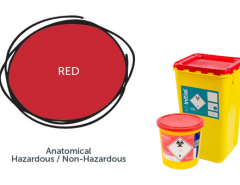
The containers must follow the Health Technical Memorandum 07-01 guidance, which notes that dental amalgam bins are required to:
- Be sealable
- Be made from puncture-resistant rigid material
- Contain a mercury suppressant
- Be clearly marked as dental amalgam
- Feature the relevant hazard symbols, including toxic, long-term health hazard, and environmental hazard.
When transporting such waste, a container certified for safe transport of mercury must be utilised. Dental practices are the ones responsible for ensuring their goods are packaged and labelled appropriately and that they are transported to a waste management facility by a properly accredited service.
Keeping accurate records
Dental practices should always be prepared to support clinical waste management services and the appropriate authorities if they are asked about their maintenance of an amalgam separator.
Keep note of when a dental amalgam separator has been:
- Visually inspected
- Maintained in accordance with the manufacturer’s guidance
- Repaired
- Replaced
It is also helpful to record who carried out each task, in case further support is needed.
Support from Initial Medical
Dental teams should have a reliable source of support when maintaining their amalgam separator and managing all other aspects of the clinical waste workflow.
Initial Medical has a leading team on hand to provide clinicians with insight and advice surrounding clinical waste regulation and what it means for your practice. This includes support for the maintenance of your amalgam separators.
You can also receive your amalgam separator from the waste management specialists with the Pure Motion© amalgam separator. Ensuring 99.8% of amalgam particulate is removed from wastewater streams and 100% recyclable, it is an effective solution for any dental practice. It is suitable for all types of suction systems and is retrofittable for existing suction pumps.
Learn more about amalgam waste handling by contacting the Initial Medical team.
Frequently Asked Questions
What is the timeline for the amalgam phase-out?
Under the Minamata Convention on Mercury, countries are required to phase out the use of dental amalgam by 2034, with certain bans already implemented across the EU as of January 2025.
What are the retention requirements for amalgam separators?
Current regulations specify that all amalgam separators must have a minimum retention level of at least 95% of amalgam particles to ensure hazardous materials are effectively captured.
What does the CQC require for separator maintenance?
The CQC mandates that separators must be maintained in strict accordance with manufacturer instructions. Practices must also be able to demonstrate that waste water from every dental chair passes through a functional separator.
How should amalgam waste be stored for disposal?
In compliance with Health Technical Memorandum 07-01, amalgam waste must be stored in sealable, puncture-resistant rigid containers that contain a mercury suppressant and are clearly marked with relevant hazard symbols.