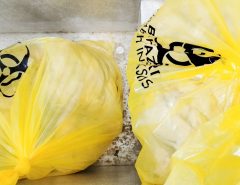
Managing clinical waste involves several key considerations for its collection, storage, and disposal, depending on the waste type. Depending on the hazards present, some are more stringent than others, such as those for anatomical waste, which is frequently handled in healthcare environments such as hospitals, dental practices and veterinary clinics
Understanding anatomical waste collection and disposal requirements, including the legal responsibilities and ethical considerations, is paramount.
Anatomical waste includes human or animal body parts, organs, tissue, blood and bodily fluids. Contaminated disposable items found in the treatment setting are typically disposed of as offensive waste unless an infectious or medical hazard is present, which may require disposal by incineration. This could include PPE contaminated by blood during the treatment of a patient with a known infection. In such cases, it may be placed into the yellow waste stream, as denoted by the clinical waste colour code.
This blog details the key requirements for anatomical waste management, with further information available on the different waste types available here:
What are the requirements for anatomical waste?
Health Technical Memorandum 07-01 (HTM 07-01) is a key document to refer to when considering all healthcare waste matters.
It notes early on that anatomical waste without chemical contamination or infectious properties does not need to be considered as hazardous waste. In turn, its contamination could make it hazardous waste, requiring slightly different management.
Anatomical waste must be segregated into four different categories, as per the guidance:
- Non-hazardous anatomical waste, such as blood bags and blood preserves, which are not infectious or chemically contaminated
- Infectious anatomical waste which is not chemically contaminated
- Chemically contaminated anatomical waste which is not infectious
- Infectious and chemically contaminated anatomical waste
Where segregation between infectious and non-infectious material is not possible, clinicians can combine them.
The clinical waste colour code designates the colour red for anatomical waste, allowing only rigid containers. Containers are either entirely red or have a red lid, but in either case they must be marked as anatomical waste for clarity.
Despite the rigid containers, sharps are not allowed into this waste stream. Instead, contaminated sharps items will be directed to a yellow sharps bin, alongside infectious and medical waste that requires incineration or alternative treatment. Other contaminated material that presents no hazards, such as PPE, may be disposed of in offensive waste bags, marked by the yellow/black tiger stripe.
All professionals who come into contact with anatomical waste, whether a clinician disposing of waste items or a clinical waste handler, must be able to easily identify if infectious and/or chemical hazards are present.
When anatomical waste is kept on site for longer than 24 hours, it must be stored in designated refrigerated units that operate below 5ºC. If it will be removed sooner, this is not the case; however, it must be stored in a secure area, importantly away from patients, the general public and any members of the healthcare team who are not appropriately trained to manage it, such as office team members.
The 24-hour deadline extends to 72 hours where the practice or healthcare setting does not operate over a weekend, as per guidance from the Environment Agency. Refrigerated anatomical waste may be kept on site for up to 14 days. In keeping with these protocols, it is essential to record when such waste is produced; if an audit were to take place, this is vital information to have on hand.
What are the ethical considerations for anatomical waste?
The ethics around respectful waste management apply most to anatomical waste. While the correct disposal of hazardous waste avoids future harm to people and the environment, anatomical waste typically includes recognisable human or animal material and requires handling with dignity and sensitivity.
Some of the key elements of ethical waste management, as reported in clinical literature, include timely disposal of waste, acting long before a practice is considered to be “stockpiling” waste, and understanding that in many cases, patients will still identify an amputated tissue as part of them, as well as partially belonging to them; whilst it is understood that a healthcare team will dispose of amputated tissue, for example, if it were found to be mismanaged, patients could understandably react with anger at the disrespect shown to something that was once so essential to them.
In cases of amputation, the loss of a limb is equated by some to the grief experienced when widowed, further exemplifying the need for a tactful approach. Ethical considerations also arise around religious beliefs. Some individuals may feel despair at the prospect of disposal of a body part, for example, if they themselves have specific wishes for how their body is cared for after passing.
Discussing a suitable approach to disposal, where it still falls within clinical regulations and legal responsibilities, ensures professionals are actively helping patients work through the grief associated with major surgeries; whilst total peace with the final approach is not guaranteed, it is the responsibility of healthcare professionals to do their utmost to help patients in such difficult circumstances.
How is anatomical waste disposed of?
In line with HTM 07-01, anatomical waste must be rendered safe during disposal. This is possible by following these four criteria, all of which are required:
- Reduce the number of infectious organisms present in the waste to a degree that no additional precautions are needed to protect workers or the public against infection from the waste.
- Destroy anatomical waste so that it is no longer generally recognisable.
- Render all clinical waste, including equipment and sharps contaminated by anatomical tissue in this example, unusable and unrecognisable as clinical waste.
- Destroy the component chemicals of chemical, or medicinal and medicinally contaminated waste.
If any of these requirements are not met, the anatomical waste cannot be considered as “rendered safe”.
The clinical waste colour code also provides information on the preferred disposal methods for each waste type. For anatomical waste, incineration at an approved facility is the only option. A suitable specialist waste management service will ensure this is undertaken, and clinical teams should request information on the transportation of their waste products to ensure they are handled properly, to the best of their knowledge.
What changes should I make to ensure safe anatomical waste management on my site?
First, consider updated clinical waste training for the entire team. Completing this together offers the chance to agree on ways of working.
Second, clinical teams should have effective storage solutions at points of use as well as dedicated zones for safe storage within the time limits outlined in HTM 07-01. This includes using anatomical waste containers that are designed in line with current regulations. Initial Medical provides red rigid waste containers that are suitably labelled for a variety of hazards. These offer superior protection against leaks and spillages, high puncture resistance, and hermetically sealed lids which enhance odour control.
Frequently Asked Questions
How long can anatomical waste be stored on the premises?
Unrefrigerated anatomical waste can be stored for up to 24 hours in a safe area (or 72 hours if extending over a weekend), and refrigerated anatomical waste (kept below 5ºC) for up to 14 days.
How is anatomical waste disposed of?
In line with current regulations, anatomical waste must be disposed of via high-temperature incineration.
How does anatomical waste interact with the clinical waste colour code?
Anatomical waste should be disposed of in red containers, but contaminated items may be placed in yellow containers where appropriate.
What are the key ethical problems around anatomical waste?
Patients will often have a strong connection to anatomical waste following surgeries, as the body part was once part of them, and may be seen as somewhat belonging to them. Some patients will also have religious concerns around how anatomical body parts removed during surgery are managed, and this must be handled with care on a case-by-case basis.
Do teeth count as anatomical waste?
Teeth are typically considered offensive waste instead of anatomical waste.