


When establishing a waste management system in a laboratory, it’s important to understand the guidelines and regulations that professionals are held to. These shape the workflows used daily, and ensure technicians and visitors are kept safe.
It’s important to start with guidelines that lay out standards for the overall waste management routine, including…
Health Technical Memorandum 07-01: Safe and sustainable management of healthcare waste (HTM 07-01)
HTM 07-01 is provided by NHS England, and delivers guidance on how to manage healthcare waste items, including clinical, offensive and pharmaceutical waste. The text applies to laboratories and goes into depth about environmentally friendly steps that can be taken by all professionals.
Also, a part of HTM 07-01 is the waste colour code, which is an important part of all disposal processes in the laboratory. It assigns colours to waste containers depending on the hazards that will be present. These include:
- Yellow – for highly infectious clinical waste that is contaminated with medicines or chemicals, in a laboratory this could include contaminated lab samples and cultures, tubing with medicine residues, infectious diagnostic kits, or any other chemically-contaminated lab waste.
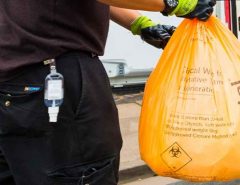
- Orange – for clinical waste with known infectious items but with no chemical or medicinal contamination, this would include contaminated PPE, dressings and swabs
- Purple – for cytotoxic and cytostatic waste, including any materials contaminated with chemotherapy drugs or other cytotoxic/cytostatic medicines. There are frequently found in cancer research laboratories.
- Blue – for non-hazardous pharmaceutical waste such as empty or used vials and ampoules, out of date medicines and denatured controlled drugs.
- Light Blue – for microbiological laboratory waste that must be autoclaved within the laboratory before final disposal via the Orange waste stream.
- Yellow and black (tiger stripe) – for offensive and non-infectious waste including nappy waste, colostomy bags and non-contaminated PPE.
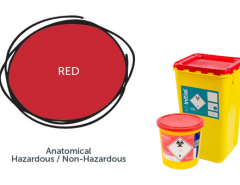
- Red – anatomical waste including human and animal body parts, organs and tissue samples.
Laboratory technicians should also refer to HTM 07-01 when assessing sharps waste management, as it provides key methods for minimising injuries. This includes background on when to use a dedicated sharps bin and its features.
The Controlled Waste (England and Wales) Regulations 2012

This important set of regulations defines clinical waste, hazardous waste and offensive waste. It lays the groundwork for many other regulations, and those disposing of items in a laboratory should be familiar with its definitions.
The Controlled Waste (England and Wales) Regulations 2012 replaced the guidance of the same name from 20 years prior.
The Health and Safety (Sharp Instruments in Healthcare) Regulations 2013
Laboratory technicians will often manage sharps items, including needles and syringes, and these must be safely disposed of. In addition to HTM 07-01, the Health and Safety (Sharp Instruments in Healthcare) Regulations 2013 provides further depth for how to practically and legally manage sharps waste.
It also reiterates the need for safer sharps where it is reasonably possible, and reminds technicians to avoid recapping needles after use (unless it controls a greater risk of harm).
These regulations note that for the safe disposal of medical sharps, written instructions and clearly marked, secure containers should be located close to the point of use.
The Animal By-Products (Enforcement) (England) Regulations 2013
For laboratories that work with animals, the Animal By-Products Regulations 2013 are important. They provide guidance on how to manage these waste items that are not intended for human consumption and ensure any associated risks of harm are mitigated.
Guidance from Initial Medical Laboratories don’t need to organise their waste management protocols alone. They can turn to Initial Medical, a leading medical waste service provider. With a range of clinical waste containers available for safe and compliant use in the laboratory, the Initial Medical team can also provide support to ensure you remain compliant with current regulations. Our knowledgeable team will be able to answer your questions and keep you informed of the latest changes. Simply get in touch today.
Leave a Reply