


Laboratory clinical waste guidance
The laboratory can use a number of different materials day to day, and produce a variety of hazardous solutions, which each require safe handling.
Understanding key aspects of the waste workflow is vital for a safe and successful laboratory. This begins with an analysis of the items that are regularly disposed of, and ensuring every team member has the capabilities to manage the process.
What is laboratory waste?
Many different waste items can be disposed of by a laboratory. Since the type of work that can be carried out in such a setting is so broad, it’s important to consider items with a range of hazardous properties, as well as those that feature none at all.
Everyday general waste may be produced in offices, staff areas, and laboratory spaces. This municipal waste can often be disposed of in traditional black bin bags, or recycled where at all possible.
Hazardous items may be used or produced, creating infection, medication and chemical contamination risks. These products need to be disposed of appropriately, and if an item is or could potentially be cytotoxic, this needs to be separated into its own waste stream.
Offensive or hygiene waste, including non-infectious PPE, sanitary waste, and items contaminated with blood or other bodily fluids should not be considered hazardous, and instead can be allocated to their own waste streams.

Key regulations for waste management
A variety of regulations apply to laboratories regarding their waste management responsibilities.
Health Technical Memorandum 07-01 from NHS England directly applies to laboratory spaces. Despite referring to “healthcare organisations” throughout, the guidance is explicitly designed to support laboratory technicians and team members.
This outlines the NHS Net Zero Carbon targets, designed to be more environmentally friendly, but also lays out key aspects of the waste management workflow, such as the waste colour code. Included is information on which containers to use for each waste item dependent on its properties, and a helpful summary of notable legislation.
Key regulatory guidelines are:
- The Controlled Waste (England and Wales) Regulations 2012 – defines “clinical waste” and “offensive waste”
- The Hazardous Waste (England and Wales) Regulations 2005 – regulates the movement of hazardous waste through England and Wales to its point of disposal
- The Animal By-Products Regulations 2013 – designed to control the risk of disease from animal by-products, and will apply to any laboratory that needs to handle animals in their research
Health and Safety (Sharp Instruments in Healthcare) Regulations 2013 – for safely managing sharps waste such as needles or lancets.
How to dispose of waste items safely
Waste containers need to have certain properties that ensure technicians can safely store waste products.
For sharps waste, a container must be puncture-proof and solid; a bag risks harm for all handlers. Technicians must also ensure it is secured with a lid to limit access and avoid accidental harm.
Liquid waste cannot always be discarded into the sewer, for example, if it is a medicine. Technician teams must have a puncture-proof container that can safely store such products if they cannot be discarded in the sewer; minimal amounts of liquid waste can be kept in a sharps bin, for example, if it was in a needle and syringe, it would not need to be completely emptied.

The laboratory waste colour code
The clinical waste colour code laid out in HTM 07-01 is pivotal to everyday workflows. All laboratory technicians should be aware of the different waste streams, and products that should be included.
Key features of the colour-code include:
- Yellow – for infectious, pharmaceutically or chemically contaminated waste, such as needles, syringes, scalpels, Pasteur pipettes, and broken glass contaminated with infectious material.
- Orange – for waste potential contaminated with infectious material, such as gloves, aprons, and other non-sharps waste from work with known infectious/pathogenic agents.
- Purple – for cytotoxic and cytostatic waste, such asVials, ampoules, or syringes used to prepare or administer chemotherapy drugs or other cytotoxic/cytostatic compounds (even if empty).
- Yellow/Black (Tiger Stripe) – for offensive and hygiene waste, such as non-infectious gloves, masks, and lab coats that are not contaminated with infectious agents or hazardous chemicals.
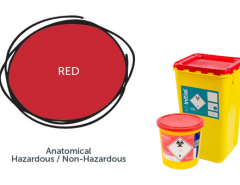
- Red – for anatomical waste including animal or human tissues.
- Blue – for medicinal waste, including expired medicines and testing kits.
- White – for moulds or waste from dental or casting procedures.
The use of the colour-code throughout a laboratory means waste management is streamlined and knowledge is completely synced between technicians and specialist waste handlers.

Choosing a trusted laboratory waste partner
Waste partners can aid with solutions throughout a laboratory to segregate and store waste items, as well as collect it to be properly managed in line with current regulations.
Initial Medical is perfectly placed to provide support, with a background in laboratory and medical care waste management. Laboratory teams can find a range of waste containers available on the website, including UN-approved sharps waste bins and eco-friendly clinical waste bags, made from 30% recycled materials.


Leave a Reply