
When Benedict’s law took effect on 1st September 2026, it marked a major step forward for pupil safety in England. The new legislation sets clear requirements for every school and early-years setting to ensure staff and the school are well-prepared to protect children from life-threatening anaphylactic reactions. This includes maintaining a stock of adrenaline auto-injectors (AAIs) for emergency use.
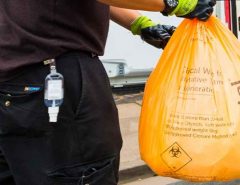
This means schools must not only implement measures to protect children, but also comply with legal requirements for the safe disposal of expired and used AAIs as clinical waste.
This guide helps headteachers, school business managers and safeguarding leads understand what this critical legislation means and how to comply with medical waste requirements.
What does Benedict’s Law require schools to do?
Benedict’s Law is set out in the Children’s Wellbeing and Schools Act 2026 and in the Department for Education’s statutory guidance (Allergy Safety in Schools). It establishes legally binding allergy safety requirements across England. Effective from 1st September 2026 (spring 2027 for independent schools), it establishes four mandatory statutory duties for all maintained schools, academies, pupil referral units, early years settings and onsite wrap-around care.
The four statutory requirements
- Publish an allergy policy: Schools must publish a dedicated allergy policy on their public website and review it at least annually. The policy must cover allergen risk management across all areas (classrooms, kitchens, off-site trips), emergency response protocols, spare AAI storage and designated leadership oversight.
- Annual whole-staff anaphylaxis training: Mandatory annual training is required for every member of staff on site, not just designated first aiders or teachers. This includes catering, administrative, support, cleaning, and lunchtime staff. Training must cover recognising the symptoms of anaphylaxis, administering AAIs and executing the school’s specific emergency response protocol.
- Onsite emergency spare adrenaline auto-injectors (AAIs): Schools are legally required to stock universal, unassigned spare AAIs on site at all times. These emergency pens can be administered to any pupil or adult experiencing anaphylaxis, including those with no prior diagnosed history of allergy.
- Individual healthcare plans (IHPs) for every allergic pupil: A formal IHP and allergy action plan must be maintained for every pupil with a diagnosed food, animal or venom allergy, regardless of past reaction severity. IHPs must clearly detail specific allergens, typical symptoms, prescribed medication, emergency contact details and step-by-step emergency procedures, with mandatory annual reviews.
Scope and operational provision
These statutory duties apply to the whole school environment and all on site provisions operated by the school, including breakfast clubs, after-school care, wrap-around provision and holiday activities. Allergy information and IHPs must be accessible to staff across every shift and session.
The tragic cases behind Benedict’s Law
Benedict’s Law is named in memory of five-year-old Benedict Blythe, who tragically died from anaphylaxis at school in 2021. In response, his parents established the Benedict Blythe Foundation to campaign for systemic reform and standardised allergy safety standards across all educational settings.
Benedict’s story, along with the tragic cases of Karanbir Cheema and Natasha Ednan-Laperouse, highlights how quickly severe allergic reactions can escalate. Anaphylaxis is a rapid, systemic response that can compromise breathing and circulation within minutes. The immediate administration of an adrenaline auto-injector (AAI) is a crucial first line defence before emergency responders arrive.
Before Benedict’s Law, allergy protocols in UK schools were largely discretionary, leading to wide inconsistencies. While some proactive schools maintained spare AAIs and trained all staff, others relied on pupils to provide medication and on a few designated first aiders, leaving many settings unprepared for an emergency.
Benedict’s Law addresses these vulnerabilities by establishing a mandatory, national framework to ensure a consistent standard of safety and preparedness for every child.
Rising child allergy rates and why schools are high-risk environments

Childhood allergies across the UK have reached unprecedented levels. Around 40% of UK children have been diagnosed with an allergy at some point in their lives, and an estimated 680,000 English pupils are suffering from one or more allergies. In an average-sized classroom, 1 to 2 pupils are likely to have a food allergy, while hospital admissions for food allergies have nearly doubled over the past two decades.
The most common types of childhood allergies are:
- Hay fever (allergic rhinitis): Affects roughly 15% of UK school children.
- Eczema (atopic dermatitis): Affects between 10% and 25% of UK children.
- Asthma: Affects roughly 10% of school-aged children.
- Food allergies: Affect an estimated 5-8% of all UK children (rising to 6–8% for children under 3). The most common causes for children are cow’s milk, eggs, peanuts, tree nuts, fish and shellfish.
This dramatic surge places educational settings on the front line of emergency healthcare. Anaphylaxis occurs more frequently in schools than in any other setting outside the home, accounting for 18% of all food-allergic reactions and 20% of fatal food-allergic reactions in children. Notably, cow’s milk alone is responsible for 26% of fatal food anaphylaxis in school-aged pupils.
Key factors that make school environments particularly high-risk:
- Unpredictable onset: 30% of allergic reactions in schools occur in pupils with no prior diagnosed history of allergy.
- Policy and equipment gaps: Before Benedict’s Law, 1 in 3 English schools lacked a dedicated allergy policy, and almost half did not stock emergency spare adrenaline auto-injectors (AAIs).
- Training deficits: 25% of schools fail to train staff on recognising anaphylaxis symptoms.
Managing emergency AAIs and legal compliance for sharps waste disposal
Schools must stock AAIs, ensure quick access during anaphylactic emergencies, and follow strict protocols for disposing of used or expired devices as clinical waste.
Storage and lifecycle management
- Location and accessibility: Store spare AAIs in central, easily accessible and unlocked locations (e.g. the main staff office or the medical room) known to all personnel. Never lock emergency devices in cabinets or safes.
- Routine auditing: Assign a designated member of staff to log device batch numbers, monitor ambient storage temperatures and audit expiration dates monthly. Expired devices must be removed immediately from active emergency kits.
Regulatory classification of AAI waste
Once an AAI is activated or reaches its expiry date, it becomes hazardous clinical waste for two reasons:
- Sharps hazard: Used devices contain concealed spring-loaded mechanisms that pose needle-stick and blood-borne pathogen risks.
- Pharmaceutical residue: Both used and expired devices retain an active pharmaceutical substance (adrenaline), which prohibits disposal in standard municipal waste or general recycling streams.
Containment and storage standards
Schools must observe the following containment standards to satisfy environmental health regulations:
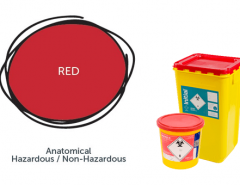
- UN-approved containers: Deposit all used or expired AAIs directly into rigid, puncture-resistant sharps containers compliant with UN 3291 standards.
- Colour coding: Use yellow containers with a yellow lid (for pharmaceutical sharps waste) or orange-lidded containers in accordance with local waste segregation protocols.
- Secure mounting: Wall-mount containers at ergonomic heights in monitored areas (such as dedicated medical rooms) to prevent unauthorised access by pupils while maintaining immediate access for staff.
Legal duty of care and documentation
Under UK environmental protection legislation, educational institutions have a statutory duty of care for all hazardous clinical waste produced on site:
- Licensed waste contractors: Collections must be carried out exclusively by a registered, licensed clinical waste management provider.
- Hazardous waste consignment notes: Obtain and archive official consignment notes for every waste collection, verifying full traceability from collection to final incineration.
- Audit readiness: Retain disposal documentation and chain-of-custody records for a minimum of three years to demonstrate compliance during health and safety audits or Ofsted inspections.
How Initial Medical helps schools maintain full compliance
Benedict’s Law requires schools to have reliable, expert support to ensure clinical waste protocols are executed correctly. Initial Medical provides specialised healthcare waste management services tailored to the operational needs and legal requirements of educational settings.
Specialised, UN-compliant sharps bins
A complete range of UN-approved, puncture-resistant clinical sharps bins designed to handle used and expired AAIs safely. Bins are available in various sizes suited to school medical rooms, complete with secure locking mechanisms and clear colour-coding to guarantee safe segregation at the point of disposal.
Term-time collection schedules
Flexible, tailored waste collection services that can be aligned with school terms to avoid unnecessary servicing during holiday periods, ensure full compliance and prevent waste accumulation on site.
Comprehensive legal documentation and audit support
For end-to-end waste traceability, every collection is accompanied by official Hazardous Waste Consignment Notes and Duty of Care certificates, creating a robust digital audit trail that demonstrates total compliance with environmental and public health legislation.
Expert guidance and site assessments
Initial Medical offers specialist advice on best-practice clinical waste management. This includes advice on ideal bin placement in school medical areas, guidance on legal waste segregation and resource materials to assist staff with operational disposal protocols.
Action checklist for complying with Benedict’s Law
Use this actionable checklist to review your school’s current operational readiness.
| Strategic action | Primary lead | Key requirements & benchmarks | Status |
|---|---|---|---|
| Publish whole-school allergy policy | SLT / Headteacher | Standalone policy published on the school website, detailing mitigation, emergency steps and staff roles. | Compliant |
| Schedule mandatory staff training | CPD Lead / Safeguarding | Annual allergy awareness and AAI administration training scheduled for all teaching and support staff. | Compliant |
| Procure and audit spare AAIs | Medical Lead / SBM | Unassigned EpiPen or Jext devices procured, stored unlocked and audited monthly for expiry dates. | Compliant |
| Establish Individual Healthcare Plans (IHPs) | SENCO / School Nurse | IHPs verified and updated for every pupil with diagnosed severe allergies, with clear emergency contact protocols. | Compliant |
| Install UN-approved sharps containers | Premises Lead / SBM | Puncture-resistant, UN 3291-compliant sharps bins securely wall-mounted in medical areas. | Compliant |
| Partner with a licensed waste service | School Business Manager | Licensed clinical waste carrier contracted for regular uplifts; Hazardous Waste Consignment Notes archived. | Compliant |
Next steps for leadership
- Assign accountability: Ensure each action item above is assigned to a named member of the Senior Leadership Team (SLT) or department head.
- Review documentation: Archive all staff training certificates, device audit logs and waste consignment notes in a central compliance folder ready for Ofsted or health and safety inspections.
- Schedule periodic reviews: Revisit this audit checklist at the start of each academic term to account for new pupils, expiring devices and staff turnover.
Protecting pupils through complete regulatory compliance
Initial Medical is dedicated to supporting UK schools through every step of healthcare waste compliance resulting from AAIs. Whether you need to upgrade your medical sharps containment, establish flexible term-time collection schedules, or verify your waste traceability ahead of an inspection, our expert team is here to assist.
FAQs
What is Benedict’s Law and who does it apply to?
Benedict’s Law, established under the Children’s Wellbeing and Schools Act 2026, sets mandatory allergy safety requirements for all maintained schools, academies, pupil referral units, early years settings and on site wrap-around care in England.
What are the four main statutory requirements under Benedict’s Law?
Schools must publish a dedicated online allergy policy, provide mandatory annual anaphylaxis training for all staff, maintain universal emergency spare adrenaline auto-injectors (AAIs) on site and implement Individual Healthcare Plans (IHPs) for every pupil with a diagnosed allergy.
Why are used or expired AAIs classified as clinical waste?
AAIs are classified as hazardous clinical waste because they present both a sharps hazard (concealed needles posing needlestick risks) and pharmaceutical residue (active adrenaline), which legally prohibits them from being placed in standard municipal waste or recycling.
How should schools store and dispose of spare or used AAIs compliant with regulations?
AAIs must be deposited directly into rigid, UN 3291-compliant sharps containers (yellow or orange-lidded). These containers should be wall-mounted in monitored medical areas and collected exclusively by a licensed clinical waste management provider.
What documentation do schools need to maintain for clinical waste compliance audits?
Schools must retain official Hazardous Waste Consignment Notes and Duty of Care certificates provided by licensed waste contractors for a minimum of three years to prove end-to-end traceability during health and safety or Ofsted inspections.