
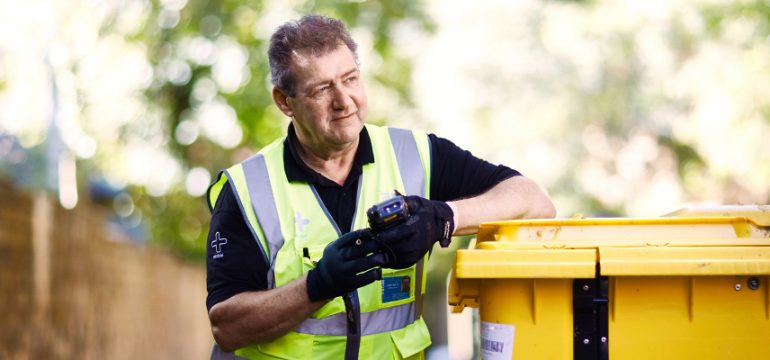

Every healthcare practitioner will need to safely store clinical waste items in the practice, often in large quantities. Wheelie bins offer an effective solution to waste storage, collecting items which can then be easily transported before collection.
These must still fall within clinical regulations and guidelines for safe clinical waste storage. It’s also vital to consider aspects such as wheelie bin cleanliness, as these containers won’t be removed from the practice. Therefore, keeping on top of infection control procedures over time is imperative.
Regulations around clinical waste wheelie bins
The wheelie bins chosen for each practice will depend on the volume of waste produced and the space available. These will be available from trusted waste service providers, including Initial Medical, but interpretations of key regulations such as Health Technical Memorandum 07-01 (HTM 07-01) will still apply.
The bags for clinical waste and sharps bins, which will then be placed in the wheelie bin, will also have to meet UN-certification.
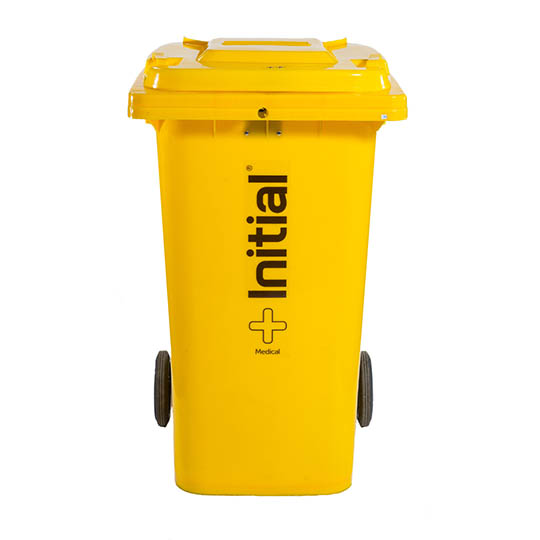
A key consideration for wheelie bins as clinical waste containers is colour and labelling. It must be possible to quickly and easily identify the type of waste in each wheelie bin. Infectious, medical, and anatomical waste will need a yellow bin; known infectious items require an orange container; offensive/hygiene waste should be placed in a bin that is both yellow and black (tiger stripe); and the generic black bin will, of course, be used for municipal waste.
Storing clinical waste wheelie bins
It’s important that clinical waste containers cannot be accessed by patients or members of the public. This means that not only should wheelie bins be kept in a secure area, but they must be fully enclosed and lockable, as per HTM 07-01.
Wheelie bins kept in areas outside the practice will be subject to the weather, and everyday wear and tear. Clinical teams must therefore choose solutions that are rigid, leak-proof and weatherproof, in line with HTM 07-01, to ensure their investment holds up over time, and to maximise the safety of waste handlers.
The lid should be securely closed whenever waste is present, except when the bin is being loaded or unloaded. If the contents are infectious but not pharmaceutical, chemical, anatomical, or palletised wastes, the container must be kept inside a secure building, rather than outside.
Contamination around wheelie bins
The items placed in a clinical waste container typically create an infection risk. The severity of this risk will vary depending on the contents; however, clinicians must always optimise opportunities to minimise and eradicate the chance of infection spread.
Studies using ATP testing, which measures the presence of living cells, show that external wheelie bins can have up to 267% more bacteria and germs than internal bins. Therefore, whilst these containers may be a necessity, they can also be a hotspot for the introduction of infection.
Healthcare practices should take steps, including decontaminating their wheelie bins at regular intervals, to avoid problems developing. This will help to manage the sources of infection, and should also be applied to nearby touchpoints.
Hand sanitising solutions are also advised. Placing these adjacent to wheelie bins is an effective reminder. It ensures clinicians can clean their hands before even touching a door handle when they return to clinical spaces, staff and patient areas.
Wheelie bin installations with Initial Medical
Initial Medical provides both clinical waste wheelie bins, with multiple sizes to choose from, depending on your practice’s needs, and effective cleaning and hygiene services for said containers.
Our wheelie bins are available up to 1100L, are designed for maximum manoeuvrability even when full, are completely resistant to UV rays, and are suitable for all weather conditions. Each is also lockable and complies with pertinent regulations.
We also have a wheelie bin cleaning service, which includes removal of loose debris and waste from bins, cleaning the containers with a powerful, solvent-free, low-pH solution and high-pressure jet wash, before using Steri-7, a high-level sanitiser that kills up to 99.9999% of germs within seconds. This is also applied to frequent touchpoints for improved peace of mind.
Initial Medical can install hand sanitising solutions in key areas surrounding waste containers, such as by bin stores and at entrances and exits to your premises. This helps ensure individuals minimise the spread of infection before they even touch a door handle. Get in touch today to learn more.
Leave a Reply