
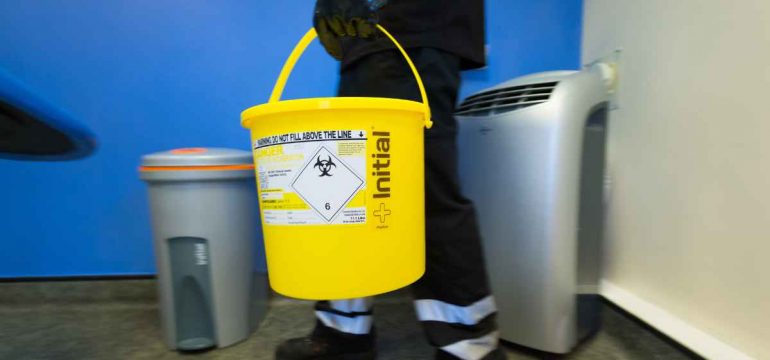

Improper sharps disposal creates serious risks. Needle injuries, infection transmission, and potential legal penalties. In the UK, the Health and Safety Executive (HSE) is responsible for enforcing sharps safety regulations, emphasising the need for robust protocols. Confidence in your team’s sharps management is fundamental to safety in your practice, and this ultimate guide provides the essential protocols you need to ensure compliance and safety.
For healthcare professionals, implementing clear sharps management protocols protects staff and patients, the environment, and ensures compliance with regulations. Rules and best practices for sharps disposal may at first appear complex, but with guidance from specialist waste management services like Initial Medical, compliance is simple.
What is sharps waste, and why does it require special handling?
Sharps are any items that can pierce the skin. This includes:
- Hypodermic needles and syringes
- Disposable scalpels and other blades
- Lancets and fingerstick devices
- Suture needles
- Contaminated broken glass
- Rigid items like IV cannulas
Unlike most general clinical waste, sharps pose a risk of immediate injury and the potential of infection transmission. The Health and Safety (Sharp Instruments in Healthcare) Regulations 2013 mandate that healthcare employers provide appropriate training, safer sharps devices where possible, and suitable disposal containers to minimise needlestick injuries
How HTM 07-01 impacts sharps waste
Health Technical Memorandum 07-01 (HTM 07-01) provides the UK standard for healthcare waste management. HTM 07-01 establishes the guidelines for waste classification, segregation, storage, and disposal across all healthcare settings, both NHS and private.
Though HTM 07-01 represents guidance for best practice rather than a legal mandate, it works closely with key regulations, including the Hazardous Waste Regulations 2005 (England and Wales), the Special Waste Regulations 1996 (Scotland) and the Hazardous Waste Regulations 2005 (Northern Ireland).
The UK colour-coding system for sharps containers
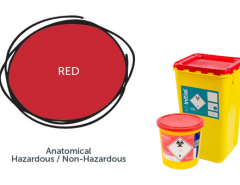
HTM 07-01 establishes a colour-coding system to ensure correct waste segregation. Not all waste streams will include sharps, so only four colours apply:
Yellow-lidded:
Used for sharps contaminated with or containing medicines or chemicals, as well as the potential of an infection risk. This includes needles used for injections, syringes containing pharmaceutical residues, and chemically contaminated laboratory sharps. Waste in the yellow stream must be incinerated or undergo alternative treatment at authorised facilities.
Orange-lidded:
Used for sharps not contaminated with medical products but often with an infection hazard, such as phlebotomy needles, blood sample collection equipment, and non-pharmaceutical sharps. Orange stream waste may be sent for alternative treatment before disposal, offering environmental advantages over incineration.
Purple-lidded:
Reserved exclusively for sharps contaminated with cytotoxic/cytostatic medicines, primarily chemotherapy-related waste. These containers require specialist high-temperature incineration due to their hazardous nature and risk of harm to the wider environment.
Yellow container with radioactive trefoil:
For any sharps waste that may be contaminated by radiation. This must be carefully managed and requires the radioactive trefoil to be visible for safe segregation.
Correct colour-coding prevents cross contamination and should ensure that all waste follows proper disposal protocols.
Quick Guide:
| Sharps Container Colour | Used For | Disposal Method |
| Yellow | Medicinally contaminated sharps | Incineration |
| Orange | Non-medically contaminated sharps | Alternative treatment |
| Purple | Cytotoxic or cytostatic sharps | Incineration |
Essential sharps container requirements
All sharps containers must meet specific safety standards:
- UN 3291 approval: Containers must be UN-certified for transporting infectious substances
- Puncture–proof construction: Crucially, a rigid plastic design prevents any penetration, which minimises the risk of harm for healthcare professionals, patients and visitors, as well as waste handlers
- Temporary closure mechanism: Containers must lock temporarily between uses to prevent unauthorised access or accidental injury
- Clear labelling: Display appropriate hazard warnings and waste classification codes
- Handle provision: Containers require handles for safe transporting
Best practice for sharps disposal
Clinical teams should follow these key principles:
- Point-of-use placement: Position sharps containers where sharps are used to eliminate the need to carry hazardous items across clinical areas.
- Fill to three-quarters capacity: Never overfill containers. Seal and replace when reaching the three-quarter mark to prevent injury during disposal.
- Immediate disposal: Dispose of sharps directly into containers immediately after use, and never re-cap needles without a safe needle recapping device or leave sharps on surfaces.
- Temporary locking: Keep containers on temporary lock between uses, opening only when disposing of sharps. Once a sharps bin has been used, do not fully reopen the lid or attempt to retrieve anything from it.
- Secure storage: Store sealed containers in designated, locked areas segregated from other waste containers.
- Documentation: Maintain waste consignment notes and documentation for hazardous sharps waste, and retain records for three years as required.
Managing sharps waste with Initial Medical
Producers of sharps waste must ensure collection by appropriate licensed waste carriers. Initial Medical provides comprehensive sharps waste management, including:
- Providing UN-approved colour-coded sharps containers in multiple sizes (0.5L to 22L)
- Point-of-use disposal equipment, including sharps brackets, POUDS trays and high security wall-mounted cabinets
- Regular, compliant collection services by ADR-trained technicians with full traceability.
- All required waste documentation
- Expert guidance on segregation and compliance requirements
- Sustainable disposal through appropriate, authorised facilities
Our specialist team can assess your current waste management, identify compliance gaps, and help implement effective solutions tailored to your team and practice. Ready to ensure your waste management meets regulatory standards? Book your free, no-obligation waste assessment with Initial Medical to identify compliance gaps and receive a tailored disposal strategy that reduces your team’s risk.
Leave a Reply