


The use of amalgam, which is a mixture of metals including mercury, in dentistry is still widely debated. However, many dental practices still employ amalgam if it is clinically indicated. Even if some dentists do not personally use the material, they may still encounter patients with amalgam restorations in place. Thus, it is vital that dental professionals know how to safely and effectively dispose of their amalgam waste.
Mercury in the environment
Mercury can enter and contaminate the environment through both natural and anthropogenic processes.
The most common natural sources of mercury in the environment include emissions from volcanoes, degassing from the Earth’s crust and evaporation from water bodies. Man-made activities including mining, burning fossil fuels and certain waste releases elemental mercury into the air. Mercury present in soil can be due to fertilisers, fungicides and from solid waste.1
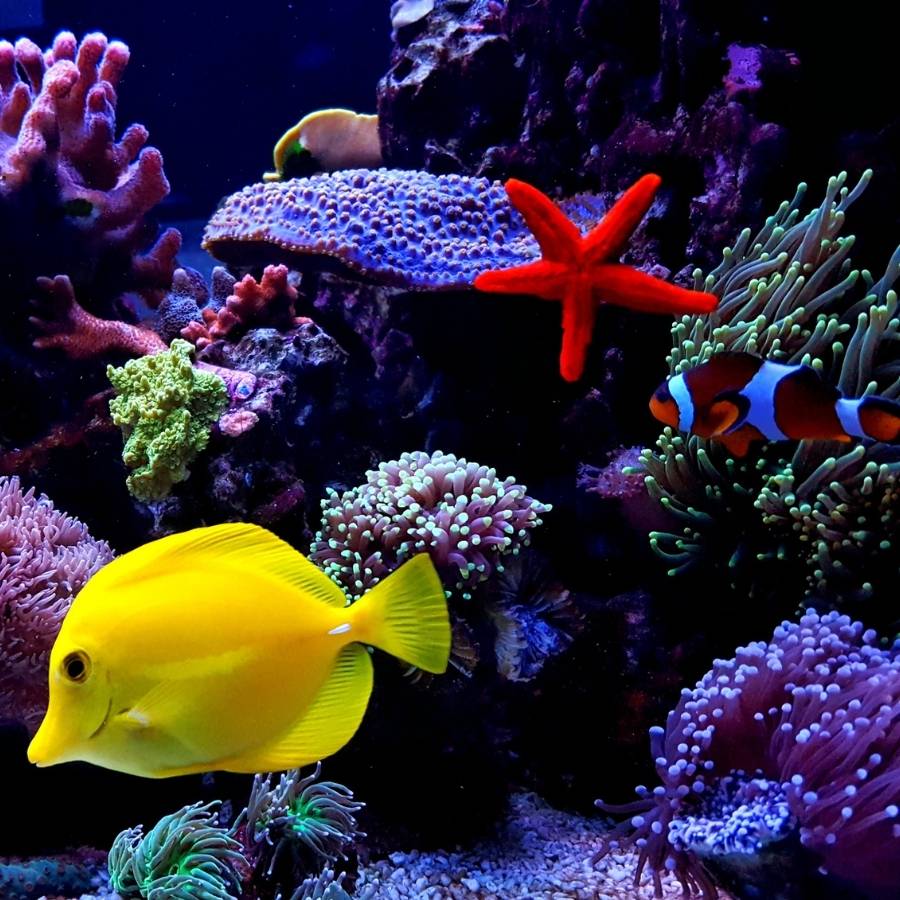
Mercury’s effects on health, the environment and wildlife have been extensively researched, and it is considered by the World Health Organization (WHO) as one of the top ten chemicals, or groups of chemicals, that are a major public health concern.ii Once in marine environments, it is transformed into methylmercury by bacteria. This can then bioaccumulate in fish and shellfish. Larger predatory fish may also have high levels of mercury, due to their consumption of organisms that contain the substance, such as plankton.ii Human consumption of fish is one of the main causes of mercury exposure in humans.2
Amalgam in dentistry
Dental amalgam was historically a popular filling material, as it was relatively cost-effective, durable and easy to place.3 However, with the increased awareness of its impact on health and the environment,4 measures to phase out amalgam’s use have been proposed.5 Minamata disease, first identified in Japan in 1956, was the result of the release of methylmercury in the industrial wastewater from a chemical factory, continuing from 1932 to 1968. The Minamata Convention, named in honour of the city and the events that occurred, formed in 2013 to protect the health of humans and the environment from man-made emissions and the release of mercury.
The European Commission released its Regulation on Mercury in 2017, which did not ban the use of amalgam in dentistry, however, it did prohibit its use for dental treatment of “deciduous teeth, children under 15 years and of pregnant and breastfeeding women, unless deemed strictly necessary by the dental practitioner on the ground of specific medical needs of the patient”.6
The European Commission also launched a study on the “Assessment of the feasibility of phasing out dental amalgam”, and they found that between the last assessment of dental amalgam from 2010 and when the study was published (2020), amalgam use dropped by an estimated 43%.i Nonetheless, the British Dental Association (BDA) argues that amalgam remains well established and a desirable option in certain cases.7
The BDA states that there is a lack of alternative materials that provide equivalent advantages, other restorative materials may trigger negative environmental outcomes (although they note that more research is needed), and that dentists need to make individual decisions and assessments regarding the clinical situation, with the best interests of the patient at heart.

Things to consider
Despite its apparent decreasing usage, dental practices that do handle amalgam must continue to segregate and dispose of the material to the highest standard, ensuring compliance with amalgam disposal regulations.
The Regulation on Mercury stated that, as of 1 January 2019, dental facilities handling dental amalgam, whether that be using amalgam and/or extracting dental amalgam fillings, must have an amalgam separator to ensure the prevention of its release into wastewater systems. They need to provide a retention level of at least 95% of amalgam particles.8
Amalgam disposal done right
With many amalgam separators available on the market, you’ll want to ensure you invest in one from a trusted, high-quality provider that meets all the needs of your dental practice, as well as providing support post-installation.
The BSI-accredited PureMotion© amalgam separator from Initial Medical ensures that your dental practice meets the current amalgam waste disposal legislation. Suitable for all types of suction systems and retrofittable to existing suction pumps, the PureMotion© amalgam separator also removes 99.8% of amalgam particulates.* Plus, as part of your service agreement, you’ll receive a professional installation from a highly-trained dental engineer, provided by Initial Medical. To support your business needs, Initial Medical will also replace your amalgam separator at regular service intervals.
By handling and disposing of your dental amalgam waste safely and efficiently, you will be ensuring that your dental practice meets amalgam waste compliance.
To find out more, visit our Initial Medical website today.
*Test Report No.0006/1 RWTHAACHEN Faculty of Medical Sciences

1 www.who.int. (2017). Mercury and health. [online] Available at: https://www.who.int/news-room/fact-sheets/detail/mercury-and-health#:~:text=Health%20effects%20of%20mercury%20exposure&text=The%20inhalation%20of%20mercury%20vapour [Accessed 9 Feb. 2022].
2 US EPA, O. (2015b). How People are Exposed to Mercury. [online] www.epa.gov. Available at:
https://www.epa.gov/mercury/how-people-are-exposed-mercury#:~:text=The%20most%20common%20way%20people [Accessed 9 Feb. 2022].
3 Mark, A.M. (2019). Amalgam fillings: safe, strong, and affordable. The Journal of the American Dental Association, [online] Available at: https://jada.ada.org/article/S0002-8177(19)30601-4/fulltext
[Accessed 9 Feb. 2022].
4 Harada, M. (1995). Minamata disease: methylmercury poisoning in Japan caused by environmental pollution. Critical reviews in toxicology, [online] Available at: https://www.ncbi.nlm.nih.gov/pubmed/7734058 [Accessed 9 Feb. 2022].
5 www.mercuryconvention.org. (2013). Mercury: Time to act | Minamata Convention on Mercury. [online] Available at: https://www.mercuryconvention.org/en/node/252 [Accessed 9 Feb. 2022].
6 ec.europa.eu. (n.d.). Chemicals – Environment – European Commission. [online] Available at: https://ec.europa.eu/environment/chemicals/mercury/regulation_en.htm#:~:text=Regulation%20(EU)%202017%2F852 [Accessed 9 Feb. 2022].
7 bda.org. (n.d.). Vital UK dentistry avoids a rapid “phase-out” of dental amalgam. [online] Available at: https://bda.org/news-centre/latest-news-articles/Pages/Vital-UK-dentistry-avoids-a-rapid-phase-out-of-dental-amalgam.aspx [Accessed 9 Feb. 2022].
8 Legislation.gov.uk. (2017). Regulation (EU) 2017/852 of the European Parliament and of the Council of 17 May 2017 on mercury, and repealing Regulation (EC) No 1102/2008 (Text with EEA relevance). [online] Available at: https://www.legislation.gov.uk/eur/2017/852/article/10 [Accessed 9 Feb. 2022].

Leave a Reply