Clinical waste is produced in nearly every healthcare appointment, and depending on the types of hazards presented, items will be disposed of differently. What begins as a simple assortment of waste products can quickly vary in outcome following collection.
Understanding how different elements of clinical waste are disposed of allows clinicians to achieve a variety of goals. It can ensure confidence when speaking with a specialist waste management service, supporting decision-making that is safe for patients, practice teams and the environment at large. It may also reinforce the decision to change the materials used in the practice, for example electing for recyclable or reusable items where appropriate, knowing that single-use products are often likely to have a more significant impact on the world around us.
The best way to understand where different types of clinical waste end up is to start by recognising the hazards presented by different items, which can then help to explain why a certain disposal method is indicated.
How is offensive waste disposed of?
Offensive waste makes up a significant volume of the items that are discarded in everyday healthcare workflows; the NHS Clinical Waste Strategy aimed for it to make up 60% of all waste produced when proper segregation and compliance are enacted by a 2026 deadline. It is different from clinical waste, as items will present no hazardous properties, meaning disposal routines more closely mirror those of municipal waste handling, according to NHS England.
There are two routes offensive waste can take in line with Health Technical Memorandum 07-01 (HTM 07-01). Firstly, and preferably, offensive waste may be sent to an Energy from Waste (EfW) facility where lower-temperature incineration is utilised as part of a larger chain process which eventually generates energy that can be distributed back into local areas. It is similar in principle to recycling in that it ensures the disposal of these items has some sort of benefit and a reduced effect on the environment.
One example of an EfW workflow uses pyrolysis. In this example, an oxygen-free environment during incineration reduces the production of harmful emissions, with one 2025 study estimating a reduction of 40% on average.
EfW workflows are not the only possible destination for offensive waste. Landfill, whilst not recommended, is a legally allowed option. This is discouraged as landfill sites have the ability to produce potent greenhouse gases and create liquid runoff which may affect local habitats.
The UK Health Security Agency notes that negative exposure routes of active landfill sites include:
- The waste materials entering the environment as they are brought onto site
- Emissions from transport and heavy machinery used on site
- Waste blown by the wind as it is deposited
- Dust generated when waste items are tipped or unloaded
- Gas or vapour generated as the waste breaks down
- Leachates produced as broken-down waste enters the surface or groundwater
Clinicians should speak with their specialist waste management service to ensure the most appropriate disposal routes can be used; a lack of proximity to an EfW site may mean this approach is not always available, and landfill is still safer than some alternatives.
How is infectious waste disposed of?
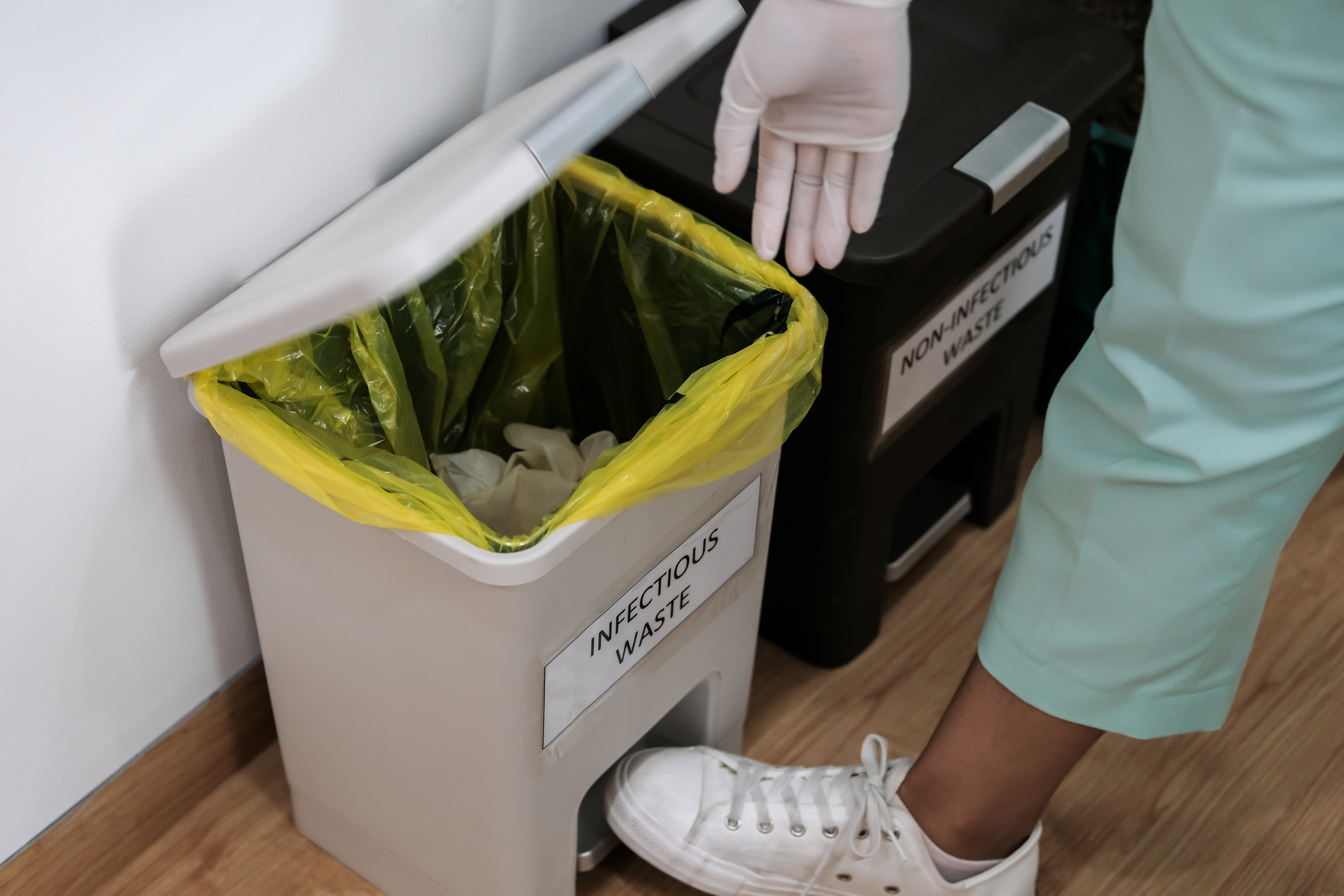
Known infectious items will most commonly be placed into orange waste containers. Where a pharmaceutical, chemical or anatomical hazard is also present, a yellow clinical waste container is instead required, as per HTM 07-01. Affected items with these additional hazards may include IV bags, pharmaceutical contaminated needles and syringes, or chemically contaminated laboratory waste.
In accordance with HTM 07-01, both of these waste streams are designated for alternative treatment or incineration. Alternative treatments are preferred for the known infectious (orange) waste stream, but as the hazards that are present increase, incineration is instead indicated first for items placed in yellow waste containers.
Alternative treatment is an umbrella term for various approaches to waste disposal. This may include sterilisation, autoclaving, and chemical or heat-based disinfection. Where these do not incinerate the items in an oxygen-rich environment, alternative treatment typically has a reduced impact on the environment, though the difference in efficacy between approaches will vary. The NHS Clinical Waste Strategy envisioned that 20% of all healthcare waste will take this route by 2026.
Sites that operate alternative treatment approaches are required to demonstrate that it will enhance the recovery or recycling of waste and is an efficient use of energy. The Environment Agency specifically cites chemical or heat-based disinfection as preferred approaches for orange container waste.
It comes as little surprise that incineration is emission-heavy. It uses high temperatures to render items safe; the steam and heat produced may sometimes be applied to energy recovery efforts. Despite its negative impact on the environment, incineration is still used, as in many instances there is no safer way to dispose of highly hazardous materials.
How is cytotoxic and cytostatic waste disposed of?
Cytotoxic and cytostatic waste also undergo incineration. These pharmaceuticals have a known negative effect on living beings, and thus cannot be risked to come into contact with people and animals.
Despite facing a similar fate as infectious clinical waste, healthcare teams must make it clear to waste collection specialists that it is a separate waste stream to avoid it being accidentally sent for alternative treatment, for example. The use of purple container lids helps to avoid such confusion and clearly indicates the contents within the waste bin.
How is anatomical waste disposed of?
Anatomical waste is often also destroyed via incineration; however, ethical considerations around these items may mean difficult conversations need to be had with patients regarding its disposal. You can find out more in our blog providing advice on how to manage anatomical waste.
How is pharmaceutical waste disposed of?
Under no circumstances should pharmaceutical waste be disposed of via landfill, as it would be possible for animals or microbes to come into contact with this heavily controlled waste, potentially developing antimicrobial resistance, which puts patient and practice team wellbeing at risk.
Instead, incineration and specialist treatment are indicated. Before sending pharmaceutical items to a waste disposal site, practice teams should consult waste management specialists and ensure the final destination is appropriately suited to manage such products.
Keeping up to date with your waste disposal requirements is key. It necessitates an understanding of where waste items end up, alongside the support of a specialist waste management service, such as Initial Medical.
With experts trained in healthcare waste management, our team members are able to provide key advice for changes to your practice, as well as compliant waste containers that are colour-coded in line with HTM 07-01.