


Aesthetics clinics waste guidance
Aesthetics professionals are not only trusted to enhance patients’ features and confidence, but are relied on to run hygienic, compliant, and safe clinics.
An often overlooked but vital area of this trust depends on the responsible management of aesthetics waste. From sharps to PPE, each item must be appropriately disposed of in order to protect clients, practitioners, and the environment.
This ultimate guide will help you to learn everything you need to know surrounding the correct and ethical disposal of aesthetics waste. From what aesthetics waste is and why it must be disposed of appropriately, which colour codes apply to which specific waste streams, to which specialist waste management partner works best for your safe disposal needs.
What is aesthetics waste?
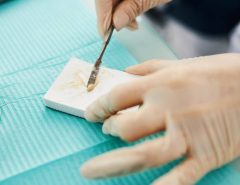
Aesthetics waste refers to the materials and medical equipment used during cosmetic and beauty treatment. Most of this is considered clinical waste by law, and could risk infection or environmental harm.
Examples include:
- Sharps – needles, syringes, blades, micro-needling rollers
- Medicinal waste – products contaminated with pharmaceutical substances
- Bodily fluids and contaminated tissues – liposuction waste, blood-soaked dressings, or swabs
- Contaminated PPE – gloves, masks, and aprons
Which regulations affect aesthetics clinics?

Clinical teams must follow the legislation that is in place for waste disposal.
These include:
- The Controlled Waste (England and Wales) regulations 2012 – clinical waste covers healthcare usage and waste derived from cosmetic procedures too.
- Environmental Protection Act 1990 – establishes the duty that clinics have in ensuring the proper management of waste in order to protect the environment.
- HTM 07-01: Safe and Sustainable Management of Healthcare Waste – NHS best practice guidance for color-coded segregation, safe packaging, storage, and disposal of healthcare (clinical) waste.
- Health and Safety (Sharp Instruments in Healthcare) Regulations 2013 – maintaining that sharp instruments are carefully disposed of to avoid injury.
- Simpler Recycling: workplace recycling in England – a new regulation requiring all businesses with more than 10 full-time equivalent employees to separate general waste, dry mixed recycling, and food waste.
How to dispose of aesthetics waste safely
Safe disposal involves several steps:
- Segregation:
Different aesthetics waste should be separated using colour-coded containers that are designated for each waste product. This helps avoid contamination and subsequent legal consequences.
- Containment:
Once segregated, waste needs to be safely stored in the appropriate containers to prevent further risks.
Licenced waste carriers must then be employed to dispose of the waste ethically and appropriately. This involves specific, professional handling or incineration.
Sharps and liquids
Sharps must be disposed of in regulation-approved sharps waste bins. These are made from tough materials to avoid punctures, with a secure lid to avoid any spills, and subsequent injuries.
Liquid waste must be placed into a leakproof, sturdy container. This avoids odours being emitted, and the repercussions of spillages.
Aesthetics waste colour codes

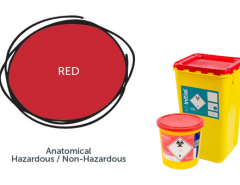
The HTM 07-01 (Health Technical Memorandum) colour code system is a framework for best practice management across the UK. It ensures all waste other than sharps and liquids are classified and segregated correctly and consistently:
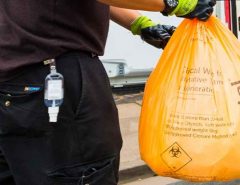
- Orange – infectious waste (wipes, gloves, dressings with blood or bodily fluids)
- Purple – cytotoxic/cytostatic waste (Botox-contaminated syringes, or gloves)
- Blue – medicinal waste (unused or expired vials)
- Yellow – infectious waste with additional hazards (chemically contaminated items)
- Yellow and black (tiger stripe) – offensive/hygiene waste such as uncontaminated PPE or hygiene products
- Black – municipal/general waste
- White/clear – recycling (where available under Simpler Recycling rules)
Colour-coded posters at disposal points can be a helpful reminder for staff.
Why the purple waste bin (cytotoxic/cytostatic) is so integral in aesthetics clinics
Cytotoxic and cytostatic waste must be placed in an appropriate purple waste container. These items are contaminated with substances that are damaging to cells, and present a significant risk to clinicians and clients.
Botulinum toxin (Botox®) quite literally paralyses muscles. This is of course beneficial in aesthetics, but can be very dangerous if released into the environment.
If any items become contaminated with cytotoxic/cytostatic material, they must be incinerated at a suitable facility, hence the separate container.
How to store aesthetics waste
Waste containers must never overflow. Bags should be appropriately labelled or tagged, and must not be more than 2/3 full. Bagged clinical waste must be stored ready for final disposal in enclosed, sturdy, leak-proof wheelie bins or a separate storage room.
Storage areas should always remain locked and away from patient spaces to avoid contamination and risks. Hand hygiene stations at storage areas are recommended for this purpose also.
Record-keeping for aesthetics waste
Aesthetics clinics must maintain accurate waste documentation. This upholds the necessary compliance for inspections.
- An annual waste transfer note for any non-hazardous waste, this includes sanitary waste.
- Hazardous waste consignment notes for every transfer of hazardous waste.
These include a full written description of the waste including correct EWC code, segregation method, and quantities.
Choosing your trusted waste partner
Waste management is never something that can be handled alone. Partnering with Initial Medical, a trusted, compliant specialist waste management service, is the best way forward. They offer a full range of colour coded bins, UN-approved sharps bins, reliable collections by ADR-trained teams, and ISO-accredited, environmentally-focused workflows.
Leave a Reply