

Male incontinence is a profound, yet largely unaddressed, issue in men’s health, affecting approximately 9 % of men across the UK. Despite its prevalence, it remains a significant taboo, a silent struggle for many, demanding constant, exhausting vigilance to prevent leaks and avoid the associated shame. For men of all ages, from those recovering from surgery to the older generation managing natural bodily changes, the psychological weight of the stigma often overshadows the physical reality of the condition.
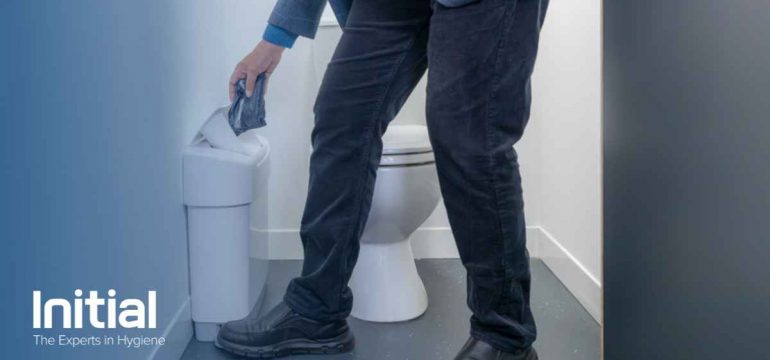
In the UK, this issue is compounded by a significant infrastructure gap. Workplace and public washrooms often fail to meet the needs of male sufferers, a problem exacerbated by the widespread closure of council-managed public toilets. The simple act of disposing of a sanitary pad is often a source of high anxiety because, unlike in female facilities, male cubicles frequently lack sanitary waste disposal bins.
However, this is not just a matter of convenience; it’s a fundamental issue of human dignity and health equity. The solution lies in businesses and local governments taking proactive measures to ensure male washroom facilities are properly equipped for all users. This article covers:
- What causes male incontinence
- The social impact of male incontinence
- Setting accessibility standards for men’s washrooms
- Promoting action for incontinence sufferers in male washrooms
What causes male incontinence
Urinary incontinence is not a disease, but a symptom with multiple possible underlying causes. In men, it is frequently caused by issues with the bladder, prostate, urethra, pelvic floor or nervous system.
Primary causes of male incontinence
- Prostate conditions: An enlarged prostate (BPH) is the most common cause, which can block the urethra and prevent the bladder from emptying properly. Prostate cancer or treatments for it, such as surgery (prostatectomy) or radiation, can also lead to weakened muscles and nerve damage, resulting in stress or urge incontinence.
- Neurological disorders: Damage to the nerves that control the bladder can disrupt signals, causing incontinence. Major causes include stroke, Parkinson’s disease, multiple sclerosis (MS) and brain tumours.
- Overactive bladder (OAB): Muscles in the bladder may contract involuntarily too often, causing a sudden, uncontrollable need to urinate, even if the bladder is not full.
- Overflow incontinence: Often caused by an obstruction (like an enlarged prostate). The bladder never fully empties, so it reaches max capacity frequently, and the excess simply spills out, often as a constant drip.
Temporary or contributing factors to incontinence
- Medications: Certain medicines, such as diuretics (water pills), sedatives or muscle relaxants, can trigger incontinence.
- Infections/Inflammation: Urinary tract infections (UTIs) or prostatitis (inflamed prostate) can cause temporary leakage.
- Lifestyle and diet: Excess caffeine, alcohol or carbonated drinks can irritate the bladder. Obesity puts extra pressure on abdominal and pelvic muscles.
- Constipation: Rectal pressure from chronic constipation can affect bladder capacity and function.
- Diabetes: Diabetes can cause nerve damage (neuropathy) that affects bladder sensation and function.
The social impact of male incontinence
The social impact of male incontinence can be overwhelming. It also varies significantly depending on a man’s stage of life. In 2026, while campaigns such as our Accessible Washroom Campaign and the British Toilet Association’s Loo of the Year awards have begun to raise awareness, sufferers can still face many challenges in managing their conditions.
A common thread across all ages is the need for vigilance: the constant mental burden of the preparations needed to leave the home, i.e. scanning for exits and toilets in the places being visited. The specific social consequences evolve as men age.
Adolescents and young men
For boys and men in their teens and 20s, incontinence is often a closely guarded secret.
- The double stigma: Society views incontinence as an old person’s or a baby’s issue. For a young man, this creates a crisis of identity and masculinity.
- Social avoidance: Fear of the smell or a visible patch often leads to declining invitations to social events such as festivals, sleepovers or long car journeys with friends.
- Education and early career: Frequent toilet breaks can be misinterpreted and viewed as laziness or slacking off by teachers or managers who aren’t aware of the condition.
- Bullying and self-esteem: In school or university settings, the fear of discovery can lead to extreme anxiety and defensive social withdrawal to avoid being a target.
Middle-aged men
For men over 30, the impact often shifts toward professional stability and romantic intimacy.
- The workplace glass ceiling: Men in physical roles (construction, logistics) may find that lifting or long shifts without toilet access make their jobs untenable. This can lead to frequent sick leave or forced career changes.
- The pub and sport culture: In the UK, much male bonding happens over a pint (albeit a bladder irritant) in a pub, or through active sports (which can trigger stress incontinence). Men often drop out of sports such as five-a-side football or Sunday leagues, losing their primary social support network.
- Intimacy and relationships: Arguably the most sensitive area. The fear of leaking during sex can cause men to pull away from partners, which is often misinterpreted as a loss of attraction, leading to relationship strain or breakdown.
Older men
The estimated prevalence of urinary incontinence is about 11% in men aged 60 to 64, rising to 21% in men older than 65 and reaching 32% in men over 80. Incontinence in men over 60 is also frequently linked to other age-related health complications and functional declines. The outlook for men aged over 60 is often one of shrinking horizons.
- The toilet map: Life becomes restricted to a safe zone. Men may only travel to the local shops or a specific park because they know the exact location of every accessible toilet.
- Loss of dignity: The shift from being a provider to someone who may need help managing pads or hygiene can lead to a sense of helplessness and shame.
- Mental health spiral: There is a direct statistical link between male incontinence and clinical depression in older age. The combination of reduced mobility and toilet anxiety often leads to total social isolation.
Universal social barriers
Several factors make incontinence difficult to manage, regardless of age.
- Lack of sanitary bins: Male toilets are often not equipped with them. Men are forced to smuggle used pads out in their pockets or bags, leading to high anxiety and early departure from social events.
- Toilet access cards: While helpful, many men find it embarrassing to present a card to a stranger in a queue, leading them to avoid busy places altogether.
- Public toilet closures: The decline in the number of public toilets in the UK has created toilet deserts, making social participation outdoors nearly impossible for those with urgency issues.
Setting accessibility standards for washrooms
The Accessible Washroom Certification Programme, operated by Initial Washroom Hygiene, is a tiered assessment and recognition system for UK businesses to demonstrate that their facilities meet or exceed essential accessibility standards.
The programme helps commercial and public spaces move beyond minimum legal requirements to support individuals with both visible and hidden disabilities.
Certification tiers
After a free assessment, businesses are awarded a certificate based on their level of commitment to accessibility:
- Bronze Tier: Focuses on meeting fundamental accessible washroom standards.
- Silver Tier: Expands upon the base level by integrating additional accessible products.
- Gold Tier: Represents a holistic commitment, providing extensive resources and signage to cater to a broad spectrum of disabilities.
Key programme features
- Inclusive signage: The programme introduces signage that identifies provisions for various conditions, such as stoma bags, autism spectrum disorder (ASD), Crohn’s disease and ambulatory aid use.
- Hidden disability support: It addresses the unseen challenges faced by people with hidden disabilities who are often challenged about their right to use accessible facilities.
- Compliance and hygiene: Ensures facilities comply with the Workplace (Health, Safety and Welfare) Regulations, particularly regarding the provision of hygiene waste disposal bins for diverse needs.
- Free assessment: Businesses can receive a free expert assessment to determine which tier they currently meet and how to improve their facilities.
Promoting action for incontinence sufferers in male washrooms
Initial Washroom Hygiene is a Corporate Champion of the British Toilet Association (BTA) and a major sponsor of the Loo of the Year Awards that set national benchmarks for washroom standards. A key activity of the partnership is developing products that meet the BTA’s dignity standards.
The Signature Inclusive Sanitary Bin was designed specifically to be unisex and to have a larger capacity to handle both female hygiene pads and bulkier male incontinence pads.
In early 2026, Initial launched a series of podcasts to promote washroom standards, the first of which is an interview with Raymond Martin, Managing Director of the BTA, on the future of public washrooms in the UK.
The silent struggle of male incontinence demands more than just awareness; it requires concrete action to ensure dignity and health equity. By implementing inclusive washroom standards, businesses can dismantle social barriers and make daily life manageable for millions of men.


Leave a Reply